In high-speed multi-camera motion analysis systems, the precision and efficiency of the calibration process directly determine the upper limit for subsequent trajectory tracking, pose estimation, and deformation reconstruction.
However, traditional calibration methods have long relied on fixed target boards, manual parameter tuning, and multiple rounds of pose shooting. Calibrating a single camera typically takes over 30 minutes, and the workload multiplies for multi-camera collaborative setups.
This pain point not only lengthens test preparation cycles but also amplifies the impact of manual operations on result consistency.
To address these challenges, the ICE CYPRESS TrackSight product officially introduces the 3D Calibration Rod Method—replacing fixed targets with handheld waving and manual tuning with fully automatic computation, redefining the operational paradigm for high-speed camera calibration.
How does the calibration rod work?
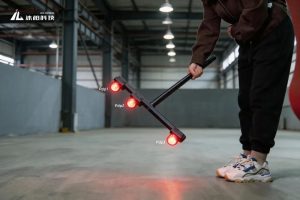
The 3D Calibration Rod is a specialized calibration device equipped with highly recognizable LED rod. The spatial positional relationships between these rods are precisely pre-calibrated.
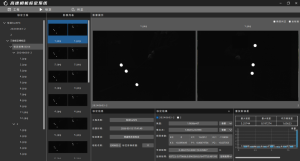
In practice, an operator simply holds the Rod and waves it naturally within the cameras’ combined field of view, covering approximately 80% of the capture volume.
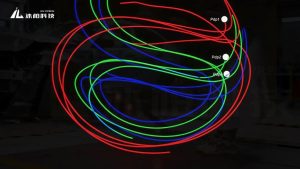
High-speed cameras distributed across multiple viewpoints synchronously capture images of the rod at various spatial positions. The system extracts the 2D coordinate sequences of the rods in real time. Combined with their known 3D coordinates, and based on multi-view geometric constraints and a global optimization strategy, the system will automatically calculates the intrinsic parameters, extrinsic parameters, lens distortion coefficients, rotation matrix, and translation vector for each camera.
Unlike traditional 2D planar targets, the markers on the 3D rod are distributed in 3D space. A single capture provides the system with richer depth information constraints.
The entire process requires no fixed target boards, no manual intervention in calibration parameters, and a single capture session completes the calibration for all cameras simultaneously.
Five Dimensions: How it’s both Faster and More Accurate
1. Dynamic High-Precision Rod Recognition
The highly recognizable LED markers on the rod can be stably captured by cameras even during high-speed motion. Even under complex lighting or partial occlusion, the algorithm maintains continuous tracking of each rod’s spatial trajectory, providing a robust and reliable data foundation for parameter calculation.
2. End-to-End Efficient Closed Loop
A single waving motion can complete the synchronized calibration of multiple cameras within 5 minutes, improving calibration efficiency by over 80% compared to traditional methods like checkerboard patterns. This leap in efficiency directly compresses test preparation cycles, allowing engineering teams to dedicate more time to core testing tasks.
3. Multi-Scene Adaptability in Indoor Environments
The rod calibration method adapts to indoor lab environments (30-50mm focal length lenses), large-space setups, and complex conditions with lighting variations or partial occlusion, supporting multi-camera synchronization. In scenarios where traditional methods struggle due to space constraints or lack of target deployment conditions, the 3D Calibration Rod demonstrates significant environmental adaptability advantages.
4. Independent R&D, Controllable & Closed-Loop Verification
The 3D Calibration Rod calibration algorithm is entirely independently developed, with no reliance on foreign technology stacks, and is compatible with domestic high-speed camera hardware ecosystems. The system features a built-in closed-loop verification mechanism, automatically outputting accuracy evaluation metrics after calibration to ensure consistency and traceability of results across batches. This is particularly crucial in scenarios with strict process standardization requirements, such as military testing and regulatory certification.
5. Deep System Synergy
Once calibration data is processed, camera parameters directly flow to downstream modules for tracking/identification, 6DoF pose estimation, and 4D deformation reconstruction. Unlike traditional architectures where calibration data and subsequent analysis workflows are isolated, the 3D Calibration Rod Method, as an integral part of the TrackSight end-to-end analysis system, achieves integrated workflow from spatial reference establishment to multi-dimensional analytical output.
Application Scenarios
1. Automotive Safety Testing
Monitoring crash tests and airbag deployment requires multiple high-speed cameras to synchronously capture millisecond-level dynamics from different angles. The 3D Calibration Rod can quickly synchronize camera arrays within crash test labs, ensuring accuracy for human pose estimation and motion trajectory measurement.
2. Aerospace & Military Testing
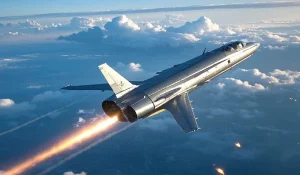
Scenarios like ejection seat trajectory analysis and ballistic measurement often lack conditions for deploying fixed targets. The handheld waving calibration method requires no additional space for target setup, perfectly adapting to such extreme testing environments.
3. Scientific Research & Education
In experimental scenarios like biomechanics, fluid dynamics, and material mechanics, the efficiency of multi-camera collaborative calibration directly impacts research output pace. The 3D Calibration Rod’s streamlined operation significantly reduces equipment setup time and optimizes experimental workflows.
4.Industrial Machine Vision
For regular calibration needs in high-speed positioning on production lines and large-space 3D measurement, the low barrier to operation of the rod calibration method effectively reduces long-term operational costs.
The release of the 3D Calibration Rod Method is a significant milestone in the continuous evolution of the TrackSight calibration technology portfolio.
As China’s first fully independent, high-precision motion analysis system, TrackSight remains committed to addressing users’ real needs with robust technological strength.
From traditional fixed targets to handheld dynamic calibration, from manual parameter tuning to fully automatic computation, from isolated calibration data to end-to-end system synergy—these leaps are reflected not only in improvements to individual technical metrics but also in an upgraded product design philosophy: making high-precision calibration no longer a labor-intensive task requiring specialized expertise and significant time investment, but rather an efficient, reliable, and reproducible standardized process.