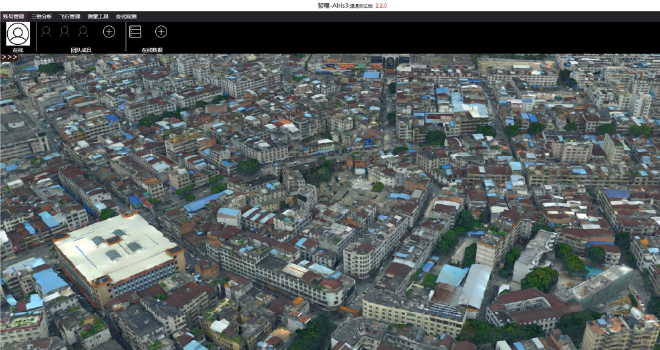
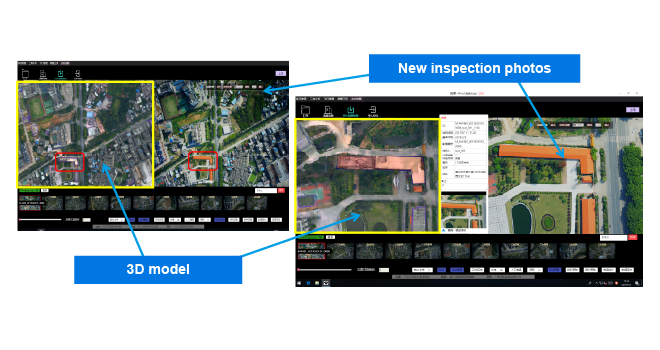
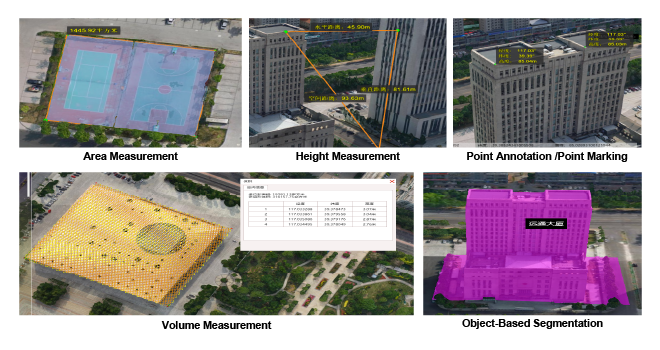
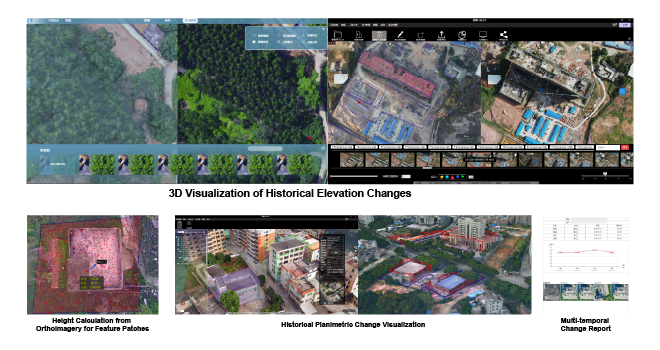
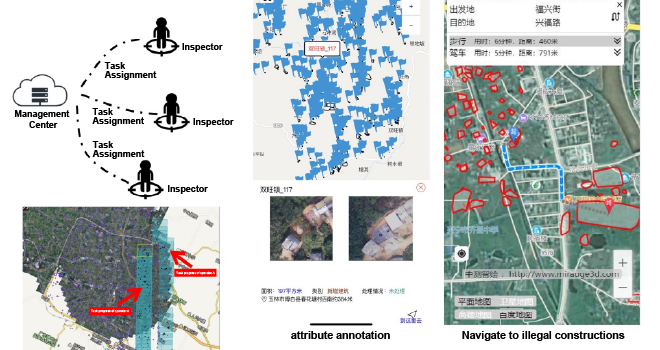
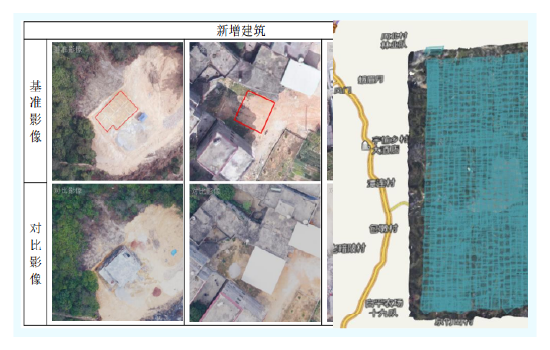
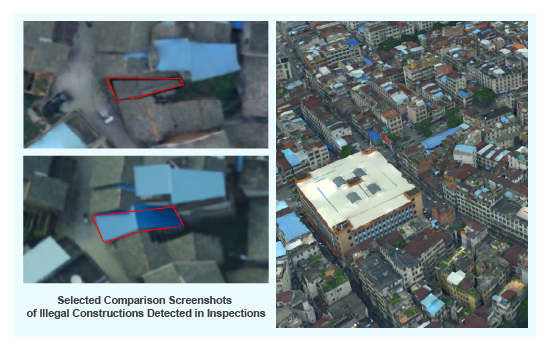
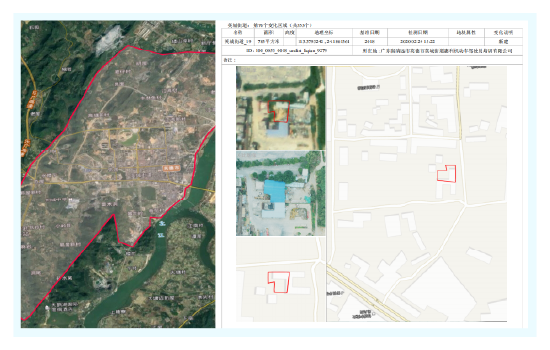
The solution combines 3D modeling, AI-assisted change detection, and spatial analysis to support the inspection, measurement, and review of suspected illegal construction. By comparing aerial imagery and 3D models collected over time, it helps authorities identify potential changes, prioritize field inspections, and organize evidence for follow-up assessment.
Limited coordination between agencies, gaps in public communication, and fragmented data make it harder to share inspection findings, coordinate field activities, and respond to suspected violations efficiently.
Illegal construction inspections may rely heavily on manual experience and isolated observations. Without systematic analysis and comparisons across multiple survey periods, it can be difficult to distinguish meaningful changes, assess potential violations, and prioritize follow-up inspections.
Concealed construction activity, limited visibility, and the time required for repeated field inspections can make large-area monitoring challenging. Satellite imagery may lack the detail required for certain inspections, while conventional UAV workflows can require substantial effort for data collection and review.
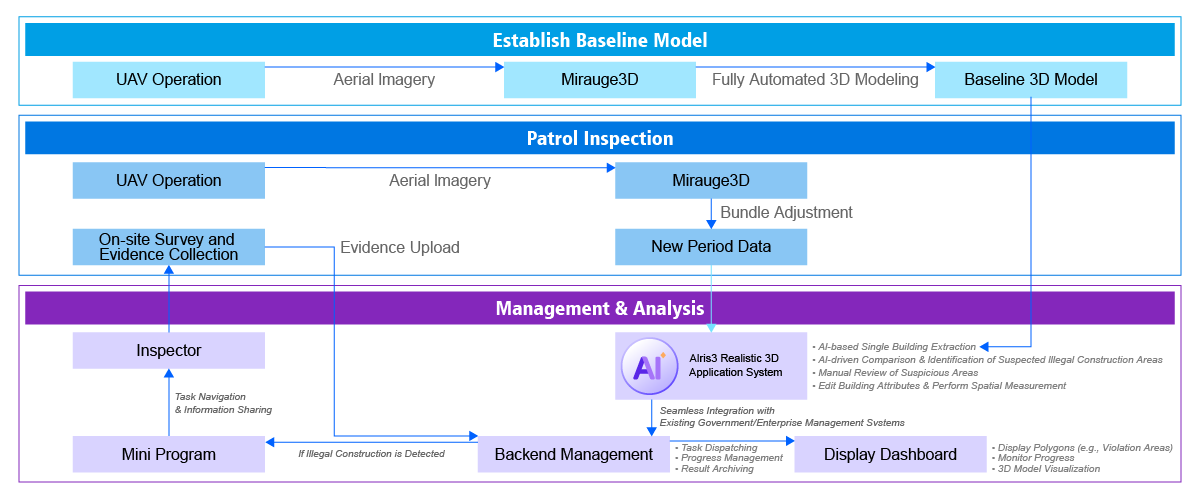
The solution combines regular UAV surveys, 3D modeling, and AI-assisted change detection to identify and visualize potential changes in the built environment. Suspected unauthorized construction can then be reviewed through field inspections and evidence collection. This workflow connects aerial monitoring, spatial analysis, field verification, and case documentation to support more consistent inspection and follow-up.

In the reported deployment, a 3-person team covered 100 km² in 4 days, with data-update time reduced by 86%. The workflow also supported the identification of potential unauthorized-construction hotspots for further review.
UAV aerial surveys and 3D modeling support systematic coverage of defined inspection areas across urban, industrial, and rural environments.
In the reported deployment, UAV-assisted data collection and AI-supported processing helped reduce manual inspection and data-processing workloads. Routine operating costs were reported to be 68% lower, with monitoring updates supported on a weekly cycle.
Efficient data processing supports a 7-day update cycle, enabling recurring change detection and follow-up inspections to support ongoing unauthorized-construction monitoring.


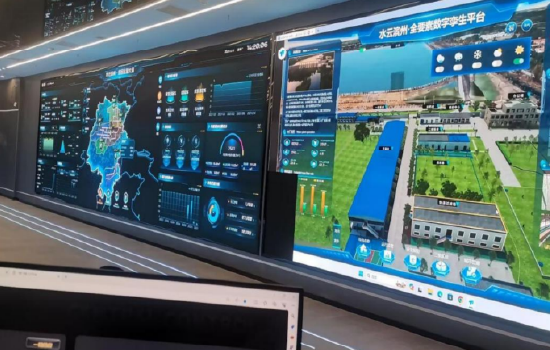
Jointly built with Binzhou Water Group — Shuiyun Binzhou: Integrated Supervision, Operation & Management Water Utility SaaS Platform and Digital Twin Development Project

Selected as a 2024 Smart Water Utility Typical Case by the Ministry of Housing and Urban-Rural Development (MOHURD)

Accurate pipeline simulation and real-time monitoring effectively improve O&M efficiency and pipeline network safety.

Traditional method: 3-4 personnel could only inspect one street block per week;
Solution outcome: 3-person team + 1 UAV covered 100 km² in 4 days, detecting over 1,000 illegal constructions—efficiency increased by dozens of times.

Operation scale: 45 km² covering Yingcheng Sub-district and surrounding areas;
Solution outcome: 1 day of flight + 1 day of processing, identifying 353 change spots with 1.2 km² of suspected illegal land use.

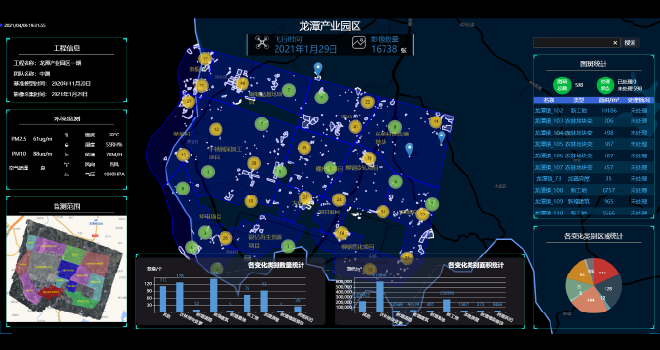
Longtan Industrial Park (54.07 km²): 1 day of flight + 1 day of results, 356 change spots (9 categories including new buildings and roof extensions);
Baiping Industrial Park (40.9 km²): Monthly monitoring cycle, 478 change spots, providing precise support for land acquisition and park governance.
Share your application, project environment and technical requirements.
Follow Us :

Visual spatial intelligence for mapping, reconstruction and analysis.
Copyright © 2026 ICE CYPRESS. All rights reserved.