Industrial-grade high-speed motion analysis with sub-pixel accuracy and 6-DoF motion tracking — powering high-precision research in aerospace, advanced manufacturing, and biomechanics.
TrackSight is a high-speed motion analysis systemwith multi-scenario calibration and three engines: high-speed object tracking, 6DoF pose estimation, and 4D deformation reconstruction. With full-cycle simulation management, it delivers closed-loop workflows from design to validation, meeting high-precision analytics needs in aerospace and advanced industries.

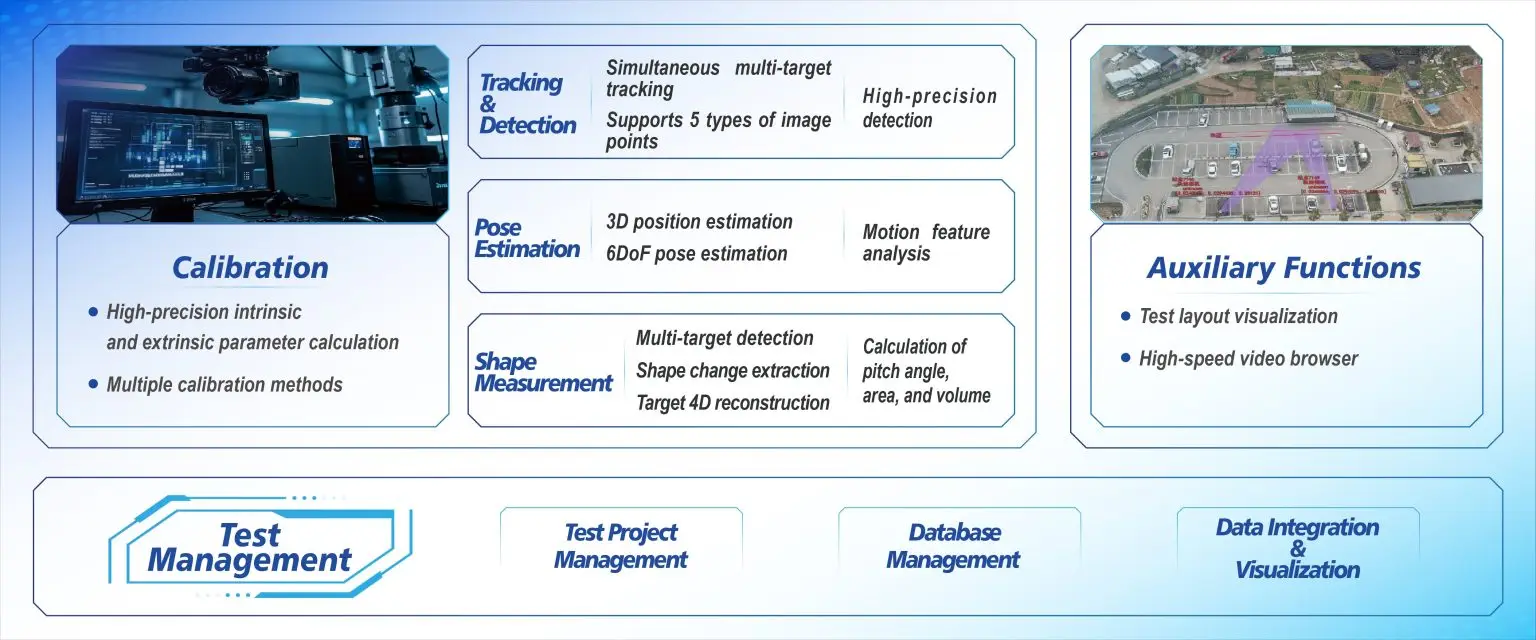
The workflow covers five modules: calibration, tracking, 6DoF pose estimation, 4D measurement, and auxiliary functions, all managed by unified project and data tools.

A modern 3d motion analysis system removes the core limitations of contact sensors and single-camera 2D setups. Here is how TrackSight compares on the dimensions that matter most for high-precision testing:
| Dimension | TrackSight Capability | Description |
| Non-contact vs attached sensors | Optical tracking (non-contact) | No physical wiring or attachment required, preserving the object’s natural motion behavior |
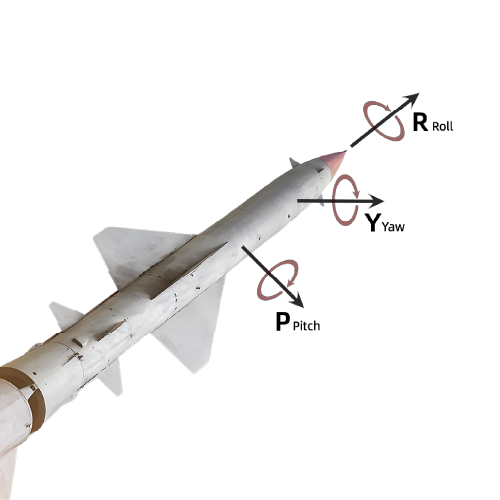
| 3D + orientation vs 2D | 6-DoF (X/Y/Z + yaw/pitch/roll) | Provides full spatial pose instead of only 2D position |
| Precision capability | Sub-pixel accuracy (0.3 pixel) | Enables measurement resolution beyond single-camera approaches |
| Multi-target & long-range | >5 targets, up to 200 m | Supports simultaneous tracking of multiple targets with long-range 6-DoF computation |
| Robustness in harsh environments | Occlusion / glare / low-light resistance | Maintains stable tracking in conditions where conventional optical systems fail |
| 4D deformation analysis | 3D + time (spatiotemporal reconstruction) | Captures dynamic shape deformation rather than a single static point |
For aerospace, automotive, and materials testing, this means richer data per test and fewer repeated runs.
These five pillars form the technical backbone of the motion tracking system — spanning multi-camera calibration, sub-pixel tracking, 6-DoF pose calculation, 4D contour reconstruction, and a digital-twin proving ground. Together, they deliver precise movement analysis from experimental setup through final validation.

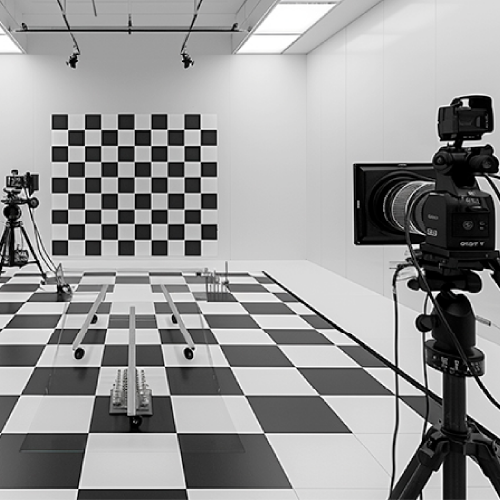
Full lab/field/aerial coverage, 5 calibration algorithms, RTK-assisted positioning, compatible with 300mm telephoto lenses.

0.3-pixel accuracy, occlusion & glare & low-light resistant, supports marker & markerless modes.

Attitude error <0.5°, 200m long-range calculation, weak-texture & small-target detection, precise cylinder roll angle.

Real-time flexible contour extraction (error <1%), 3-camera volume measurement, 4D spatiotemporal deformation.

2D/3D Virtual Proving Ground, Multi-Source Data Fusion,Test Design → Analytics → Report Generation (Closed Loop)

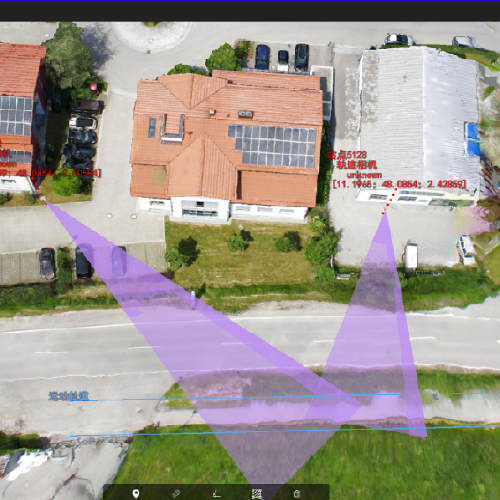
A flexible camera calibration system for diverse testing environments, enabling rapid deployment across indoor laboratories, marker-free outdoor fields, and aerial monitoring.
As the high-speed object tracking core, it enables precise positioning and continuous tracking of fast-moving targets, with a minimum recognition accuracy of 0.3 pixels.
Dual Recognition Modes — Marker-Based motion capture tracking with coded targets, cross-shaped quadrant markers, and circular markers; Marker-Free: AI model-driven tracking of non-marked objects.


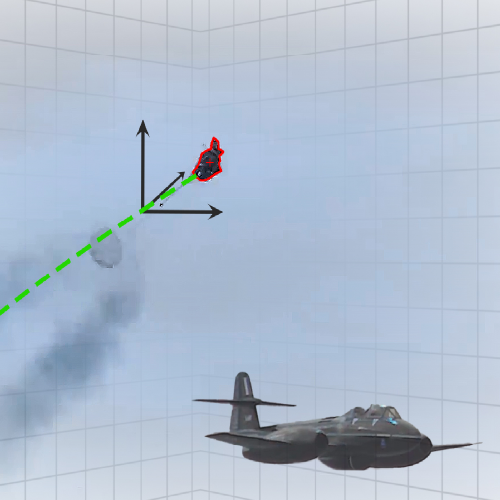
Real-time 6-DoF motion tracking of 3D position (X, Y, Z) and orientation angles (yaw/pitch/roll), with pose recognition accuracy of <0.5°.
Complex Scene Adaptability: Supports single/multi-camera motion tracking, low-texture small target recognition, and dynamic roll angle calculation (e.g., Projectile Spin Test)
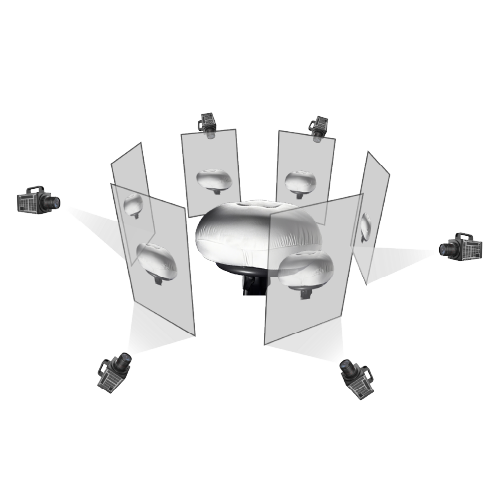
Using 3D motion analysis, it extracts target contour features and quantifies deformation parameters (area, volume, deployment speed, etc.).


Comprehensive motion tracking software management, from experimental design to report generation.
Multi-Source Data Synchronization: Time-axis alignment of video data, motion analysis trajectory curves, and 3D models.
TrackSight supports two high-speed object tracking modes, so each test can use the most efficient approach:
| Dimension | Marker-Based Tracking | Markerless Tracking |
| Tracking Method | Uses coded targets, cross-shaped quadrant markers, and circular markers. | AI-driven recognition of unmarked objects. |
| Preparation Required | Physical markers must be placed on the target. | No markers or physical preparation required. |
| Accuracy | Highest positional certainty, up to 0.3-pixel accuracy. | Depends on object features and AI recognition performance. |
| Best For | Controlled rigs, repeatable benchmarks, and precision testing. | Live specimens, finished surfaces, and rapid field testing. |
| Key Advantage | Maximum measurement accuracy and repeatability. | Faster setup and greater flexibility. |
Both modes share the same engine strengths — over 5 simultaneous targets and a tracking recognition rate up to 99.6% even under occlusion and lighting changes — so teams can switch motion capture tracking strategies without changing systems.

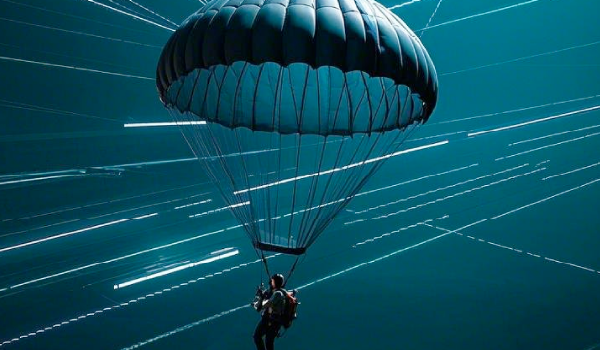
Parachute Opening Monitoring, Stage Separation Analysis

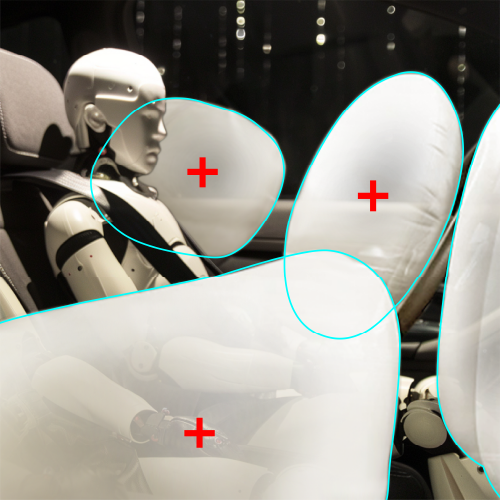
Crash Test Analytics, Airbag Inflation Kinematics

Live Cell Morphology Tracking, Microorganism Motion Analysis

Droplet Impact Dynamics Capture, Contact Angle Temporal Analysis
It measures six degrees of freedom: position along the X, Y, and Z axes, as well as yaw, pitch, and roll orientation—providing a comprehensive view of an object's movement and rotation in space. Learn more by clicking here.
The system delivers 0.3-pixel object-tracking accuracy, maintains pose estimation within 0.5°, and achieves contour-edge recognition error of under 1%, making it suitable for high-precision research and testing.
A minimum of three cameras is required for volumetric 3D measurement. Single or multi-camera configurations also support pose tracking, depending on the requirements of the test scenario.
It produces one-click technical reports with tables, graphs, and 3D simulations, alongside synchronized video, trajectory curves, and aligned 3D models.
Contact us with your test scenario and precision requirements. Our team will advise on suitable configurations and deliver tailored options.
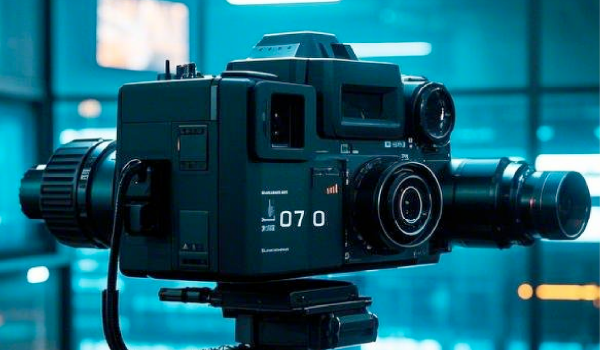
They combine high-frame-rate cameras, multi-method calibration, and tracking software to convert fast events into precise, measurable 3D motion data.
Tell us about your project or inquiry, and our team will get back to you within 24 hours.
Follow Us :

Excellence in Provider of Spatial Intelligence Products & Solutions
Copyright © 2026 Ice Cypress All rights reserved