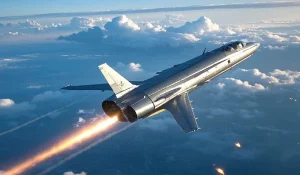
On January 16th, the DroneSwarm real-time onboard analysis system, independently developed by ICE CYPRESS, was successfully selected for the “2025 Sci-Tech Innovation Empowerment Achievements” by the Hangzhou Low-Altitude Economy Industry Alliance.

This marks authoritative industry recognition for ICE CYPRESS’s achievements in low-altitude economy industrial collaboration and technological innovation.
By integrating a distributed architecture with edge computing, the DroneSwarm system represents a significant leap forward, enabling drone swarms to transition from passive execution to active, intelligent perception and decision-making. It injects strong momentum into building a new low-altitude economy ecosystem characterized by comprehensive perception, intelligent decision-making, and precise execution.
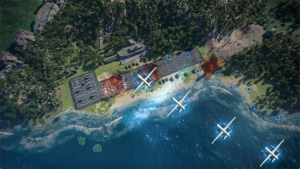
At its core, the DroneSwarm system utilizes a distributed multi-drone collaborative computing architecture. It equips drones with high-performance embedded computing platforms, enabling real-time image data processing and breaking the traditional reliance on ground-based computing power.
The system integrates visual SLAM algorithms and photogrammetry technology, supporting the unified dispatch of heterogeneous drones like fixed-wing and multi-rotor types. It can complete task assignments for 30+ drones within one minute, dynamically planning optimal flight paths, improving efficiency by 5-10 times compared to single drones.
The system possesses four core capabilities: collaborative multi-drone mission planning and execution, real-time centimeter-level orthomosaic generation, wide-area real-time 3D reconstruction, and target recognition, tracking, and high-precision positioning (with over 90% recognition accuracy and sub-meter level positioning).

The real-time 3D reconstruction function leverages distributed computing to fuse data from multiple drones, rapidly reconstructing wide-area real-scene 3D models. In some scenarios, reconstruction of areas exceeding 20 square kilometers can be completed within 10 to 15 minutes.
Currently, the DroneSwarm system has been deployed at scale in fields such as military and emergency response. In military applications, it supports scenarios like border patrol and battlefield reconnaissance, achieving a target recognition rate of over 98% and enabling 24/7 intelligent monitoring, truly realizing “integrated detection and strike.”