Forest fires can spread rapidly across complex terrains, creating challenges for traditional monitoring and emergency response methods. At Icecypress Technology, we believe that combining drones, spatial intelligence, and artificial intelligence can create a more efficient approach to protecting forests and human lives. Our forest fire detection and emergency rescue solution integrates drone swarm collaboration, real-time situational awareness, and AI-powered analysis to support faster decision-making in critical situations.
Why Drone Wildfire Detection Is Becoming Essential for Modern Forest Management
Large forest areas are difficult to monitor continuously through traditional methods. Ground patrols require significant manpower, while fixed monitoring equipment may struggle to cover remote areas with complex terrain. When a fire starts in an isolated location, delayed detection can allow flames to expand before emergency teams arrive.
Drone wildfire detection provides a flexible solution by enabling aerial monitoring over wide areas. Equipped with imaging technologies and intelligent analysis capabilities, drones can collect real-time information and help identify potential fire risks. For emergency teams, this means improved visibility, faster response, and better resource allocation.
At Icecypress Technology, we develop spatial intelligence solutions based on independent 3D and AI technologies. Our approach transforms low-altitude aerial data into actionable intelligence, allowing emergency teams to understand changing conditions and make informed decisions.
How Our Forest Fire Detection System Uses AI and Drone Collaboration
A modern forest fire detection system needs more than image collection. It requires accurate recognition, positioning, and analysis capabilities. Our solution combines AI algorithms, drone swarm collaboration, and real-time modeling to address these requirements.
Through our self-developed AI recognition technology, the system can identify both static and dynamic targets, automatically classify important information, and provide feedback during operations. This helps emergency teams quickly understand the location and condition of possible fire-related targets.
Our technology also supports real-time tracking and feedback by processing video streams during flight. Instead of waiting for large amounts of raw data to be transmitted and analyzed later, operators can receive timely information while missions are underway.
Another key capability is sub-meter positioning. By integrating multiple positioning technologies, our solution improves target location accuracy in both urban environments and remote wilderness areas. This capability is especially valuable during rescue operations where every minute matters.
The Advantages of Using Drones for Forest Fire Monitoring
One of the biggest advantages of drone-based monitoring is rapid coverage. Drone systems can access areas that are difficult or dangerous for personnel, reducing safety risks during inspections and emergency operations.
Drone swarm collaboration further improves efficiency. Instead of relying on a single aircraft, multiple drones can work together to cover larger areas, collect different types of information, and support coordinated missions. This approach is particularly useful in large-scale forest environments where traditional methods may not provide sufficient visibility.
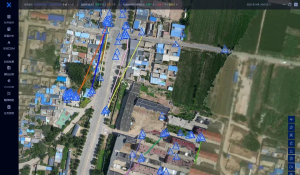
Another benefit is real-time situational awareness. Our Forest Fire Detection & Emergency Rescue Solution can generate two-dimensional and three-dimensional information during operations, helping teams visualize terrain conditions, locate targets, and plan rescue strategies more effectively.
What Are the Challenges and Costs of Drone-Based Fire Monitoring?
Although drone technology offers significant advantages, organizations should also consider several practical factors before deployment. The initial investment may include drone equipment, sensors, AI computing platforms, communication systems, and software integration.
Operational costs are another consideration. Drone systems require maintenance, skilled operators, data management, and regular technology updates. For large forest management projects, building a complete monitoring network requires careful planning to balance performance and budget.
Environmental conditions can also affect drone operations. Strong winds, heavy rain, smoke, and difficult terrain may influence flight efficiency. Therefore, reliable systems need strong adaptability and intelligent processing capabilities to maintain performance in complex scenarios.
At Icecypress Technology, we focus on creating solutions that improve efficiency while reducing unnecessary operational burdens. By combining onboard intelligence, AI analysis, and spatial data processing, our technology helps reduce dependence on traditional manual workflows and improves emergency response capabilities.
How AI Improves the Future of Forest Fire Detection Systems
Artificial intelligence is becoming a critical part of next-generation forest monitoring. Traditional monitoring methods often depend on human observation and delayed analysis, while AI-powered systems can continuously process large amounts of visual information.
Our AI technology supports target change detection by comparing historical imagery with current conditions. This allows the system to identify subtle environmental changes and provide continuous updates. Such capabilities can support early warning, fire assessment, and post-disaster analysis.
By combining AI with drone platforms, we aim to create smarter forest fire detection systems that provide not only data collection but also intelligent decision support. The future of emergency response will depend on technologies that can see, analyze, and react.
Building Safer Forest Protection with Icecypress Technology
Forest fire prevention requires reliable technology that can operate in challenging environments. At Icecypress Technology, we use spatial intelligence, 3D reconstruction, and AI algorithms to develop solutions that improve monitoring, rescue, and emergency management.
Our drone-based forest fire monitoring technology helps organizations achieve situational awareness, accurate target positioning, and faster response capabilities. By continuing to advance drone wildfire detection and intelligent analysis, we are working toward a safer future where technology supports both environmental protection and human safety.