Water infrastructure is becoming increasingly complex as cities and industries demand higher efficiency, stronger resilience, and more sustainable resource utilization. Traditional water management methods often rely on isolated monitoring systems and manual inspections, making it difficult to achieve comprehensive visibility across the entire water supply chain. At Icecypress Technology, we are transforming water management through 3D digital twin technology, artificial intelligence, and IoT integration.
As a spatial intelligence AI company specializing in 3D and AI, we develop intelligent solutions that connect physical infrastructure with digital environments. Our digital twin-powered smart water management solutions enable seamless real-time synchronization between real-world water systems and their digital counterparts. By combining IoT water management devices, BIM models, GIS spatial technology, and AI algorithms, we build intelligent water management systems that improve monitoring accuracy, operational efficiency, and decision-making capabilities.
How Does an IoT Water Management System Work?
An IoT water management system connects water infrastructure, sensors, communication networks, and intelligent platforms to collect and analyze operational data. These systems create continuous information flows between physical assets and digital management platforms.
Sensors play a critical role by collecting real-time information from water facilities. Depending on application requirements, sensors can monitor parameters such as water pressure, flow rate, equipment status, water quality indicators, and environmental conditions. This data provides operators with accurate insights into infrastructure performance.
However, collecting data alone is not enough for modern water management. Organizations need platforms that can turn large volumes of information into actionable strategies. This is where intelligent platforms and digital twins create significant value.
At Icecypress Technology, we integrate sensor data with 3D digital models to create a dynamic representation of water infrastructure. This approach enables operators to visualize assets, monitor changes, and manage complex water networks more effectively.
What Role Do Sensors Play in Intelligent Water Management Systems?
Sensors serve as the foundation of an intelligent water management system because they provide the real-time data required for accurate analysis. Without reliable data collection, it is difficult to identify risks, optimize operations, or predict future conditions.
In water supply networks, sensors can track pipeline conditions, pump performance, reservoir levels, and treatment processes. Continuous monitoring helps organizations detect abnormal conditions before they develop into serious failures.
By connecting IoT water management devices with digital twin platforms, we enable real-time mapping between physical infrastructure and virtual models. Operators can understand current system conditions through an immersive digital environment rather than relying only on traditional dashboards.
Our solutions combine multi-source spatiotemporal data with low-latency digital twin technology to create a comprehensive operational experience. This allows teams to monitor the complete water lifecycle from supply and treatment to distribution and maintenance.
How Do Digital Twin Platforms Improve Water Infrastructure Management?
Digital twin technology creates a virtual representation of physical systems that updates continuously according to real-world data. In water management, digital twins provide a powerful method for connecting infrastructure conditions, operational processes, and intelligent analysis.
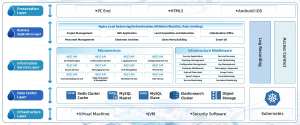
Our Digital Twin Water Management Solution is built on a 3D digital twin technical foundation. We integrate BIM models, IoT device data, GIS spatial information, and AI algorithms to construct a full-factor intelligent water management system.
Through this platform, physical water utilities are accurately reflected in their digital environment. Equipment conditions, network status, and operational changes can be visualized in real time. This enables teams to perform simulations, evaluate potential risks, and prepare effective response strategies.
For example, when unexpected changes occur within a water network, operators can analyze possible impacts through digital simulation before implementing solutions in the physical environment. This reduces response time and improves infrastructure reliability.
Why Businesses Need Intelligent Water Management System Solutions
Modern water management requires more than basic monitoring. Cities and industrial organizations need systems that support predictive analysis, efficient scheduling, and integrated lifecycle management.
Our intelligent water management system combines IoT water management monitoring, big data analytics, and simulation capabilities. By analyzing operational data, AI algorithms can identify potential risks, recommend optimized scheduling strategies, and support digital-physical system coordination.
One major advantage is improved emergency response. Through digital twin water treatment mapping, operators can quickly understand facility conditions and perform emergency drills within a realistic virtual environment. This supports better preparation for equipment failures, supply interruptions, and other unexpected situations.
Our solutions also integrate safety management, asset control, 3D roaming, and operational analysis. This creates a complete framework for managing water infrastructure throughout its entire lifecycle.
Five Advantages of Our Smart City Water Management Solutions
Our smart city water management solutions are designed to address the challenges of modern infrastructure management. The first advantage is immersive operation. By combining 3D digital twins with real-time data, we create an intuitive management environment where operators can monitor complex systems more efficiently.
The second advantage is full real-time digital twin water treatment mapping. Our platform synchronizes physical water systems with digital models, providing updated information about equipment and network conditions.
The third advantage is end-to-end lifecycle integration. From asset management and safety monitoring to emergency training and operational optimization, our solutions support comprehensive water infrastructure management.
The fourth advantage is AI-powered decision support. By combining IoT data, analytics, and simulation, our intelligent water management system helps organizations make faster and more accurate decisions.
The fifth advantage is scalability. Our standardized component library allows flexible customization and rapid deployment across different water management scenarios. Digital assets can be reused and expanded as infrastructure requirements evolve.
Advancing Future Water Management With 3D AI Technology
The future of water management depends on deeper integration between physical infrastructure and intelligent digital technologies. IoT water management provides essential real-time data, while digital twins, AI, and spatial intelligence transform this data into valuable operational insights.
At Icecypress Technology, we continue developing 3D and AI capabilities to support smarter infrastructure worldwide. Our digital twin-powered solutions help organizations achieve precision monitoring, reduce operational costs, and improve the efficiency of water systems.
By combining IoT water management technologies with intelligent platforms, we are creating a new approach to water infrastructure management. Our intelligent water management system solutions enable businesses and cities to better understand their assets, respond to challenges faster, and build more sustainable water networks for the future.