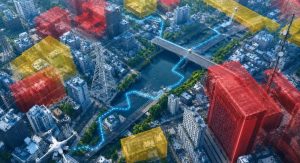
Digital twins, IoT, GIS, and monitoring tools can help water network teams visualize asset conditions, identify abnormal patterns, and improve maintenance planning. The article should describe monitoring-based maintenance support rather than implying that the system can independently predict pump failures or equipment breakdowns.
By combining IoT water management, artificial intelligence, and digital twin technologies, modern water utilities can move from reactive repairs toward proactive monitoring and decision-making. We believe intelligent technologies will play a critical role in helping water operators achieve more efficient, sustainable, and resilient infrastructure management in 2026 and beyond.
Why Predictive Maintenance Is Becoming Essential for Water Networks
Water supply systems include interconnected assets such as pipelines, pumps, treatment facilities, storage tanks, and monitoring devices. Managing these components effectively requires consistent visibility into their condition and performance.
Scheduled maintenance and manual inspection remain important, but they provide only periodic snapshots. Flow, pressure, water quality, and equipment-status data can help operators identify abnormal patterns that require further inspection.
Condition monitoring brings these data sources together so maintenance teams can prioritize field reviews and plan work according to observed infrastructure conditions. It should not be described as independently predicting pump failures, leaks, or equipment breakdowns.
The Role of IoT Water Management in Predictive Maintenance
IoT water management provides the foundation for collecting continuous data from physical water infrastructure. Sensors and connected devices can monitor important parameters such as flow rates, pressure levels, water quality indicators, equipment conditions, and energy consumption.
With real-time data transmission, operators gain a clearer understanding of network performance. Instead of relying only on periodic inspections, teams can identify unusual patterns and investigate possible risks immediately.
For example, a change in pipeline pressure or equipment vibration can be displayed as an abnormal pattern for operator review. The data may indicate that further inspection is needed, but it should not be presented as an automatic diagnosis of a leak, pump fault, or mechanical failure.
Historical and real-time monitoring data can also support maintenance scheduling and resource planning. Operators can compare asset conditions over time and organize follow-up work based on confirmed observations.
How Digital Twins Create an Intelligent Water Management System
Digital twin technology creates a dynamic virtual representation of physical water infrastructure by connecting asset information with current monitoring data. Operators can use the digital view to review network conditions and coordinate management activities.
An intelligent water management system built on digital twin technology integrates multiple data sources, including BIM models, IoT device information, GIS spatial data, and AI algorithms. This creates a full-factor digital environment where physical water utilities can be accurately mapped and monitored in real-time.
Through this approach, operators can understand not only what is happening within the network but also why certain issues occur. AI algorithms can analyze operational patterns, identify potential risks, and support predictive maintenance strategies.
For large-scale water networks, digital twins provide a comprehensive view of infrastructure conditions. This enables faster responses, improved planning, and more precise control over daily operations.
Improving Situational Awareness Through Real-Time Data Integration
Effective water network management requires access to accurate and comprehensive information. A modern system helps operators achieve integrated situational awareness by bringing multiple data sources together in one digital platform.
At Icecypress Technology, we develop digital twin-powered smart water management solutions designed to connect physical infrastructure with digital environments. Our solutions combine 3D digital twin technology, IoT water management devices, GIS spatial technology, and AI algorithms to support real-time monitoring and intelligent analysis.
Our digital cockpit provides centralized visibility into water flow, water quality, equipment status, and early warning information through dynamic dashboards.
The platform also presents data through interactive charts, 3D BIM models, and high-precision GIS maps. Key zones, buildings, and equipment can be labeled and queried, helping management teams quickly identify problems and improve decision-making efficiency.
Reducing Costs and Enhancing Operational Efficiency
Condition monitoring can support more organized maintenance planning by helping operators identify assets or areas that require review. Better visibility may reduce unnecessary field checks and improve coordination, but cost savings and failure prevention should not be presented as guaranteed outcomes.
Digital twin solutions also improve collaboration between different teams. Engineers, managers, and maintenance personnel can access the same accurate infrastructure information, reducing communication barriers and improving workflow efficiency.
For asset-intensive industries, including urban water systems and utility infrastructure, digital transformation creates opportunities for better asset management. By combining real-time monitoring, AI analysis, and 3D visualization, businesses can maximize infrastructure value throughout the entire asset lifecycle.
Building Smarter Water Networks with Icecypress Technology
The future of water management depends on intelligent technologies that connect data, assets, and decision-making processes. Predictive maintenance supported by digital twins and IoT water management will become increasingly important as utilities seek higher efficiency, reliability, and sustainability.
At Icecypress Technology, we provide digital twin-powered solutions that help organizations build an intelligent system for modern infrastructure challenges. By integrating 3D modeling, AI processing, GIS technology, and real-time IoT data, we enable smarter monitoring, faster responses, and more efficient operations across the water supply chain. Our goal is to help global enterprises achieve intelligent water management and create a stronger foundation for future urban development.