Video provides a record of movement, but turning that record into meaningful physical measurements requires more than watching frames. Engineers and researchers need to determine where an object is, how its position changes over time, and which physical principles can be applied to estimate its motion and forces. This process connects computer vision with mechanics, supporting applications in aerospace testing, advanced manufacturing, biomechanics, and product development.
At Icecypress Technology, we develop visual spatial intelligence technologies across 3D reconstruction, UAV mapping, and spatial AI. Our TrackSight High-Speed Target Tracking & Analysis System combines sub-pixel trajectory tracking, six-degree-of-freedom (6-DoF) pose estimation, and dynamic deformation measurement to support demanding research and testing workflows.
From Image Coordinates to Real-World Position
Every video frame represents a scene as pixels. Tracking an object’s position across successive frames produces a sequence of image coordinates, but these coordinates do not directly describe distances in meters or millimeters.
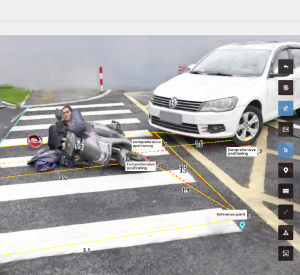
Camera calibration establishes the relationship between image coordinates and the physical scene. Depending on the experiment, researchers may use a reference object with known dimensions, a calibrated camera model, or multiple camera views to reconstruct three-dimensional positions. Lens distortion, perspective, camera placement, and the object’s distance from the camera can all affect measurement accuracy.
For reliable movement analysis, the recording setup should match the measurement objective. A fixed camera observing motion within a known plane may support two-dimensional measurements, while three-dimensional motion generally requires additional geometric information. Without appropriate calibration, apparent pixel displacement should not be treated as an equivalent physical displacement.
Calculate Velocity and Acceleration from Trajectories
Once an object’s physical position has been established, its trajectory can be analyzed over time. If position is represented by \(x(t)\), velocity describes how quickly that position changes, while acceleration describes how quickly velocity changes.
For measurements taken at regular time intervals, average velocity can be estimated by dividing the change in position by the elapsed time. Acceleration can then be approximated from changes in velocity. These calculations depend on accurate timestamps and consistent coordinate measurements.
Frame rate matters because rapid events may occur between recorded frames. A high-speed camera can capture more temporal detail, but the appropriate recording rate depends on the motion being investigated. Measurement noise also becomes important when calculating acceleration, because numerical differentiation can amplify small position errors.
Researchers therefore need to consider tracking quality, temporal resolution, and data processing methods together. Smoothing may help reduce noise, but excessive smoothing can suppress short-lived peaks that matter in impact testing or vibration analysis.
How Kinematics Connects to Force Estimation
Kinematics describes motion through position, velocity, and acceleration. Dynamics examines the forces and moments associated with that motion. Newton’s second law provides a fundamental connection: the net external force acting on an object equals its mass multiplied by its acceleration.
For an object with known mass undergoing measurable translational motion, researchers can estimate the net force when the acceleration is determined in an appropriate reference frame. However, this does not automatically reveal every individual force acting on the object. Gravity, contact forces, friction, and other external influences must be considered.
Rotational motion introduces additional requirements. Estimating torque may involve angular acceleration, moment of inertia, and the relevant rotational axis. In biomechanics, calculating joint forces from observed movement is more complex because body-segment properties, external forces, and model assumptions affect the result.
Video-derived measurements can therefore support force estimation, but video alone does not directly measure force. Where precise force values are required, researchers may need force sensors, load cells, instrumented fixtures, or validated physical models to complement image-based measurements.
Why Tracking Precision and Synchronization Matter
Small errors in measured position can affect downstream calculations, especially when researchers derive acceleration from successive measurements. Occlusion, glare, low-light conditions, motion blur, and changing object appearance can also interrupt tracking or reduce confidence in the resulting trajectory.
Our TrackSight system provides sub-pixel trajectory tracking with stated accuracy down to 0.3 pixel under specified conditions. It supports both marker-based and markerless tracking for scenes involving occlusion, glare, and low-light imagery. Actual measurement performance depends on the experimental setup and operating conditions, so the stated figure should be interpreted within its specified context.
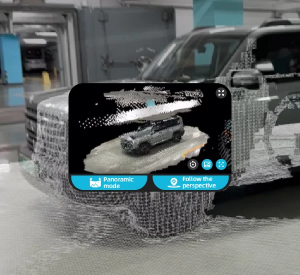
The system also supports 6-DoF pose estimation and dynamic deformation measurement. These capabilities are relevant when a test involves both an object’s spatial orientation and changes in its shape, rather than simple displacement along one axis.
For teams evaluating motion analysis software, synchronized information is equally important. TrackSight aligns video, trajectory curves, and 3D models along a common time axis, helping researchers compare visual observations with calculated results and other experiment data.
Build a Repeatable Workflow for Engineering Experiments
Reliable analysis begins before recording. Camera placement, viewing angles, expected motion range, lighting, calibration procedures, and recording settings should be planned around the experiment’s requirements. Consistent procedures also make it easier to compare repeated tests or evaluate changes between product versions.
TrackSight connects experiment planning, data capture, synchronized analysis, and report generation within a unified workflow. Its pre-test planning capabilities include camera-layout planning with intersection-angle optimization and error-range prediction. It can also generate technical reports containing tables, graphs, and 3D visualization results.
This workflow supports traceability from captured footage to interpreted measurements. Engineers can review trajectories, examine synchronized representations, and organize findings for technical evaluation. Nevertheless, calculated forces should be accompanied by clear descriptions of assumptions, input measurements, and uncertainty where applicable.
Selecting motion analysis software should therefore involve more than checking tracking resolution. Teams should assess calibration options, temporal performance, supported measurement outputs, synchronization requirements, and compatibility with their experimental methods.
Turn Visual Evidence into Defensible Measurements
Converting pixels into physical quantities requires a disciplined sequence: calibrate the imaging system, track positions, calculate kinematic variables, and apply suitable physical models when estimating forces. Each stage introduces assumptions and possible sources of uncertainty, making validation essential for high-stakes engineering decisions.
At Icecypress Technology, we bring together precision tracking, pose estimation, deformation measurement, synchronized analysis, and structured reporting through TrackSight. By combining these capabilities with sound experimental methods, engineering and research teams can use video-based movement analysis to obtain more informative measurements and develop a clearer understanding of dynamic behavior.