ICE CYPRESS

Forest Fire Detection & Emergency Response Solution

AI-Powered Forest Fire Detection · Multi-UAV Collaboration · Real-Time Situational Awareness · Search & Rescue Support

ICE CYPRESS combines multi-UAV collaboration, onboard processing, real-time mapping, AI-assisted detection, and thermal imaging to support wildfire monitoring, situational awareness, and search-and-rescue operations in complex forest environments.p

Industry Pain Points

Key Challenges in Forest Fire Monitoring & Wildfire Response

Rapid Fire Spread & Complex Terrain

Wildfires can spread rapidly across complex terrain and changing weather conditions, leaving emergency teams with limited time to assess conditions, plan access, and coordinate response.

Time-Critical Search & Rescue

Search-and-rescue operations in forests can be slowed by limited visibility, difficult terrain, and incomplete location information, especially when people are missing or injured in remote areas.

Limited Situational Awareness

Satellite imagery and ground patrols can be limited by revisit time, terrain, visibility, and access conditions, making it difficult to maintain a timely operational view during fast-changing emergencies.

Integrated Wildfire Monitoring & Emergency Response Solution

Built around the DroneSwarm real-time analysis system, the solution combines multi-UAV operations, onboard processing, mapping, AI-assisted detection, communication, and ground-side mission management within a unified forest surveillance and monitoring system for complex forest environments.

• Integrates UAV hardware, AI analysis, communications, and mission management within one operational environment.
• Connects aerial sensing, onboard processing, communications, and ground-side operations.
• Supports workflows from data capture and processing to situational assessment and field response.
• Designed to improve coverage, response speed, and access to actionable spatial information.
Intelligent Integrated Forest Fire Rescue Solution

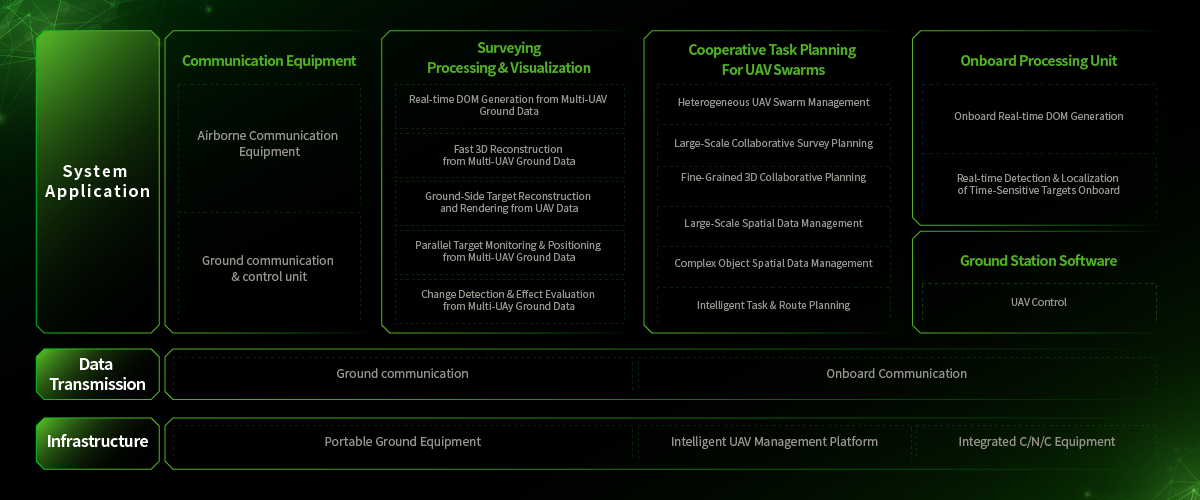
Our forest fire detection system is built on three integrated layers for monitoring and emergency response:

Our forest fire detection system is built on three integrated layers for monitoring and emergency response:

  • Infrastructure: Portable ground equipment, intelligent UAV management platform, and integrated C/N/C equipment

  • Communications: Air-ground and inter-UAV communication networks for mission data and command exchange.

  • Mission Applications: Mapping, visualization, multi-UAV task planning, onboard analysis, and ground-station software.

Together, these layers connect aerial data collection, real-time processing, mapping, detection, and coordinated field operations within one workflow.

Solution Highlights

Core Capabilities for Wildfire Monitoring & Response

Wide-Area Coverage & Rapid Deployment

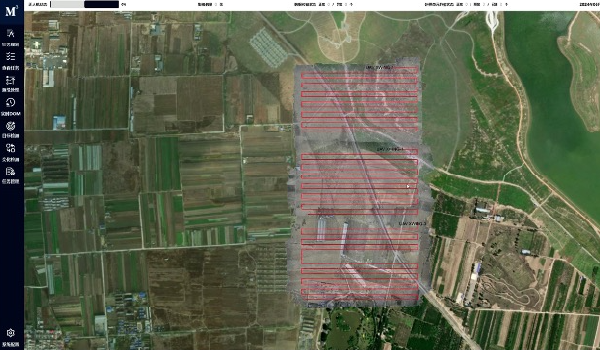
Heterogeneous drone wildfire detection swarm collaboration enables unified dispatch across multiple drone types — supporting forest management and wildfire prevention at scale.

  • Multi-rotor, fixed-wing, and hybrid drones working in coordination
  • Intelligent task allocation for efficient large-area coverage
  • Autonomous obstacle avoidance for faster emergency response

Real-Time Mapping & Data Return

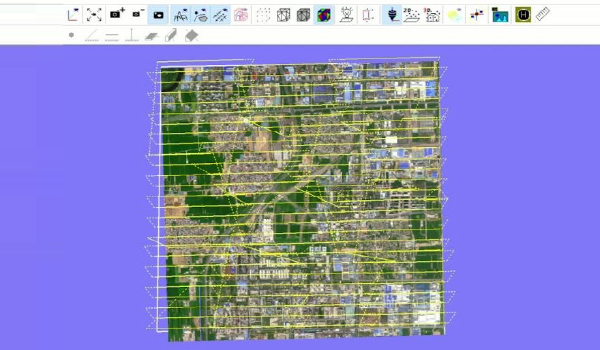
Real-time mapping generates centimeter-level DOM in flight, enabling on-the-ground wildfire analytics and rapid situational assessment.

  • Only processed data is transmitted — reducing load by 99%
  • Adapts to long-distance and harsh communication environments

AI-Assisted Detection & Precise Positioning

Our self-developed AI wildfire detection system combines GPS and visual positioning for sub-meter accuracy — a core capability of effective fire risk assessment software.

  • Accurate target classification via AI algorithms
  • Sub-meter precision for reliable tracking
  • Continuous environmental change detection

Core Functions

Comprehensive Support for Efficient Wildfire Response

Swarm UAV Collaborative Operation

Multi-UAV Collaborative Operations

Our forest fire monitoring system uses coordinated multi-UAV deployment to support wide-area coverage and flexible emergency response across complex terrain.

  • Heterogeneous UAV Collaboration: Supports coordinated operation of multiple UAV types for broader coverage across different terrain and mission conditions.

  • Dynamic Route Planning: Generates and adjusts flight routes based on mission requirements, UAV performance, and terrain conditions.

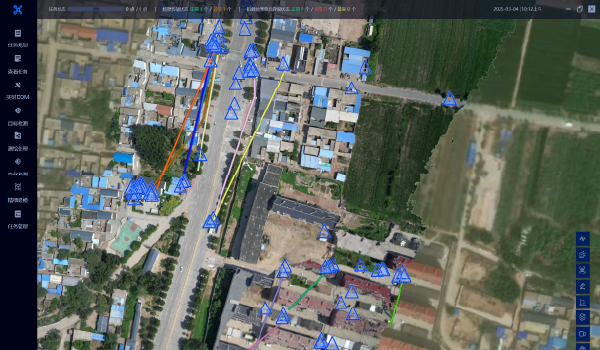
  • Real-Time Mission Management: Monitors flight status and supports dynamic task reassignment as field conditions change.

  • Collaborative 3D Reconstruction: Combines multi-angle imagery from multiple UAVs to generate 3D models for situational assessment and response planning.

Real-Time Modeling & Mapping

Onboard computing processes aerial imagery during flight to generate centimeter-level mapping and 3D reconstruction outputs, giving field teams faster access to spatial information for wildfire assessment and response.

  • Real-Time DOM Generation: Processes and mosaics aerial imagery during flight to produce updated orthophoto maps for field review.

  • Onboard 3D Reconstruction: Uses distributed computing to process multi-UAV imagery for large-area reconstruction and detailed modeling of priority areas.

  • High-Fidelity Visualization: Supports real-time 1080p 3D visualization with detailed textures for situational assessment at the command center.
Real-Time Modeling & Mapping
AI-Powered Recognition & High-Precision Positioning

AI-Assisted Detection & Precise Positioning

Self-developed AI algorithms enable precise target identification and sub-meter positioning — core capabilities that power reliable drone wildfire detection across diverse environments.

  • Multi-Target Detection & Classification: Detects and classifies supported static and moving targets within configured mission scenarios.

  • Real-Time Tracking: Processes video streams during flight to monitor target location and movement.

  • Sub-Meter Positioning: Combines GPS and visual positioning to support sub-meter target localization under specified conditions.

  • Environmental Change Detection: Compares multi-temporal imagery to identify relevant changes across monitored areas.

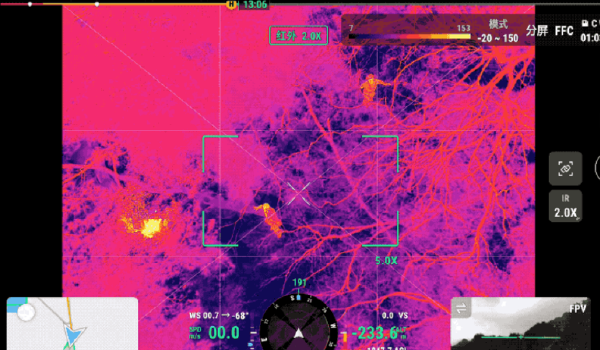
Thermal Imaging for Search & Rescue

Thermal imaging helps search teams identify potential human heat signatures in low-light, smoky, or visually complex environments, providing additional support for search-and-rescue operations in forests and remote areas.

  • High-Resolution Thermal Imaging: Compatible thermal payloads such as the Zenmuse H30T provide thermal imagery at up to 1280 × 1024 resolution.

  • Heat-Signature Detection: Uses thermal contrast to help locate potential human targets in low-light or partially obscured environments.

  • AI-Assisted Person Detection: Combines thermal and visual data with AI-assisted detection to support person localization and search-area prioritization.
Thermal Imaging Precision Search and Rescue

Frequently Asked Questions

Our solution is built on three integrated technology layers. At the hardware level, heterogeneous UAV swarms — including multi-rotor, fixed-wing, and hybrid drones — enable large-area deployment. At the software level, the DroneSwarm real-time analytics system handles onboard 3D reconstruction and centimeter-level DOM generation. At the intelligence layer, self-developed AI algorithms support AI-powered wildfire detection, sub-meter target positioning, multi-target classification, and continuous detection of environmental changes.

Emergency response mitigates damage; proactive drone surveillance prevents the crisis entirely.


The platform transitions forestry operations from reactive firefighting to predictive monitoring. Regular autonomous patrols map high-risk zones and track vegetation anomalies, feeding live intelligence into risk workflows to neutralize fire hazards before ignition.

Densely forested environments compromise vision, but our dual thermal-visual targeting ensures sub-meter precision.

By merging GPS with intelligent visual positioning, the system bypasses dense canopy blind spots. Equipped with thermal imaging tech, it penetrates smoke, darkness, and foliage to capture human heat signatures, drastically reducing search cycles and saving critical rescue time.

In emergencies, deployment speed dictates survival; our system initiates tactical flights within minutes.

Featuring highly portable ground hardware and automated fleet software, field setup requires minimal manual intervention.  The platform instantly generates optimized flight paths based on real-time terrain data, shifting teams from arrival to aerial reconnaissance. For specific deployment inquiries, feel free to contact our team.

Contact Us

Discuss Your Project with Our Team​

Share your application, project environment and technical requirements.

Follow Us :