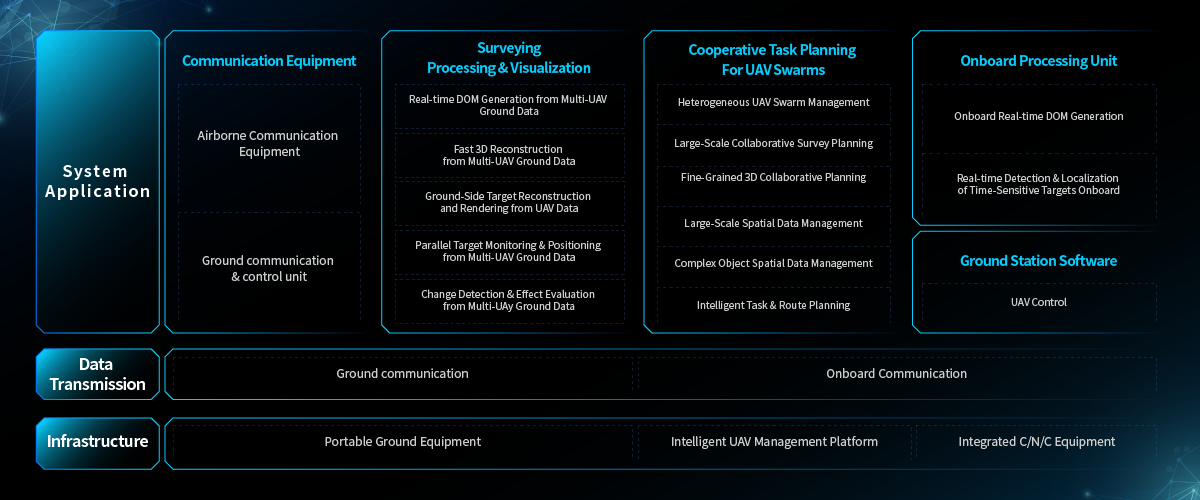
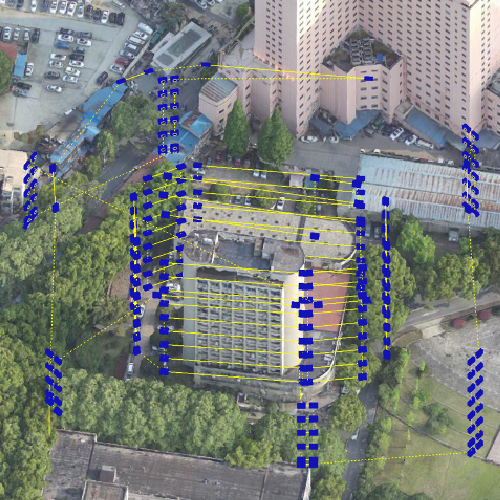
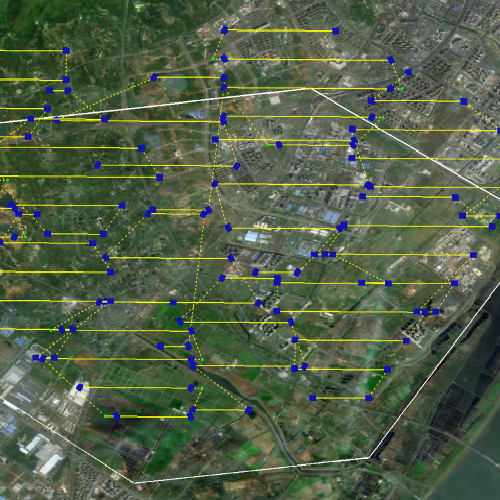
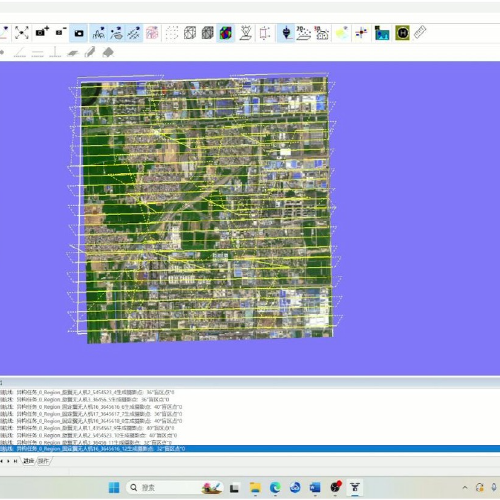
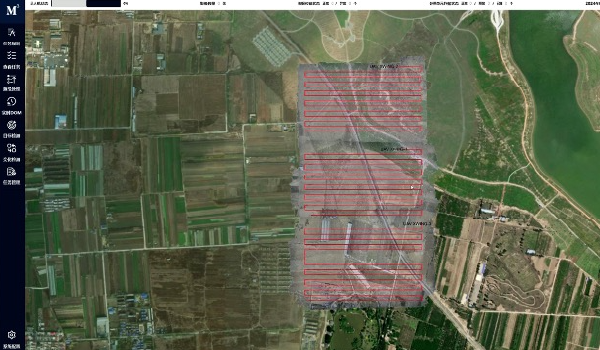
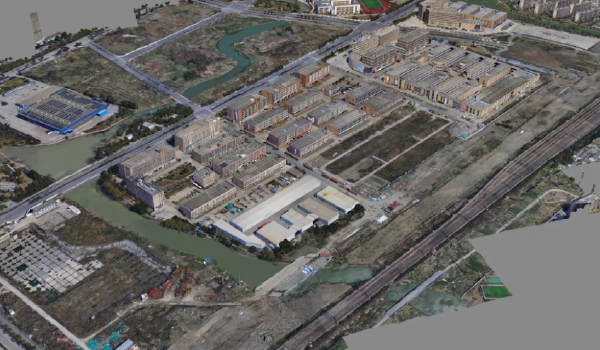
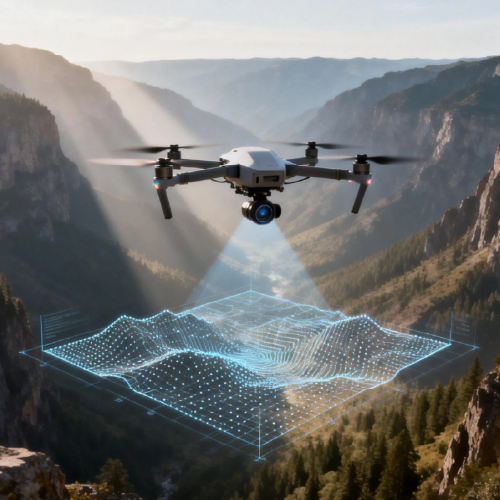
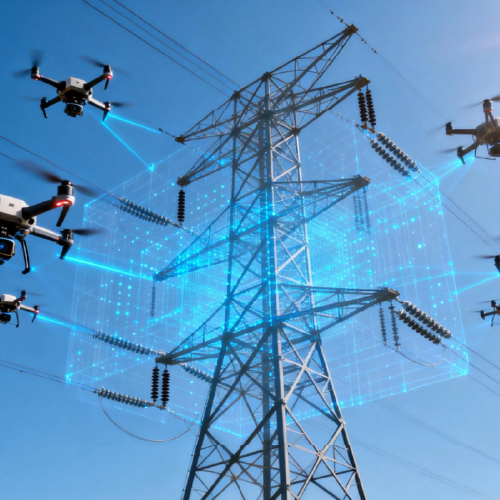
DroneSwarm is an edge-intelligent UAV cluster system engineered for precision drone data acquisition and real-time monitoring. It delivers: Multi-UAV collaborative real-time 2D/3D mapping.
Driven by two specialized lines, BeeSmart and Hunter Wing, DroneSwarm creates a unified reconnaissance-disposal-analysis operations ecosystem.
Centering on real-time onboard processing and intelligent ground-based management, DroneSwarm constructs a robust, multi-tiered architecture for real-time monitoring, enabling:


Supports unified dispatching of multirotor, fixed-wing,and hybrid formations, adapting to diverse mission scenarios with intelligent UAV tracking.

Based on UAV (unmanned aerial vehicle) performance and environmental perception (the drone’s ability to sense surroundings), this multi-UAV path planning engine (software module for determining the best routes for groups of drones) independently generates optimal flight paths, dynamically optimizes speed, altitude, and coverage density (how thoroughly an area is scanned), and supports task re-planning and UAV swarm re-grouping in emergency scenarios.

Conducts intelligent zoning based on terrain and UAV capabilities, optimizes route overlap, and ensures high efficiency in large-scale operations — powered by precise UAV positioning.


Still evaluating whether onboard real-time processing is worth the shift from a conventional drone mapping workflow? Here is a direct, dimension-by-dimension comparison.
| Dimension | Traditional Drone Mapping | DroneSwarm |
| Data Generation Timing | Raw footage stored for office-based post-processing | Drone data collection and DOM generation happen simultaneously in flight — no post-processing required |
| Communication Load | Transmits raw imagery, consuming full link bandwidth | Transmits only processed results via drone edge computing, reducing link load to 1% of traditional mode |
| Positioning Basis | Single-source GPS, prone to drift in signal-shadowed areas | GPS + visual SLAM fusion for UAV positioning, accuracy < 1× GSD |
| Tracking Continuity | Tracking interrupted when communication link drops | Dual-mode online/offline operation keeps UAV tracking active via cached imagery |
| Multi-UAV Coordination | Sequential, single-UAV missions planned manually | Multi-UAV path planning with dynamic re-planning and swarm re-grouping |
| Change / Output Analysis | Manual comparison across separate survey datasets | Automated multi-temporal DOM/3D comparison as part of drone data analytics, pixel-level accuracy over 95% |
| Decision Latency | Hours to days after landing | Minutes — functioning as a true real-time monitoring systems platform |
This comparison reflects the architecture described above: DroneSwarm doesn’t add real-time features to a traditional pipeline — it’s built so that collection, processing, and analysis happen as a single continuous loop in the air.
From tactical reconnaissance to large-scale terrain surveys, DroneSwarm’s edge-intelligent architecture adapts to mission-critical environments of every kind — including agricultural drone solutions for modern farmland management.

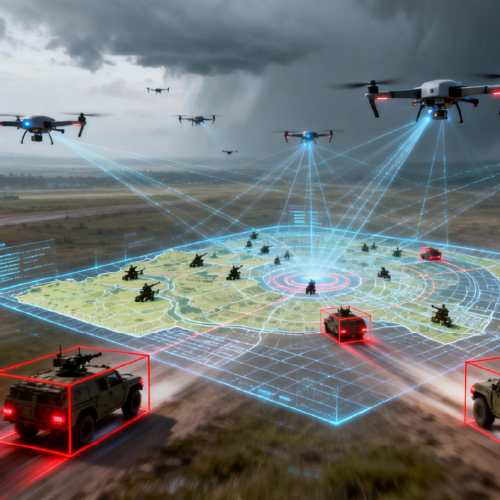
Heterogeneous UAV swarm synergy: real-time 3D terrain mapping, precise time-sensitive object tracking, tactical-level data support with no comms dependency.

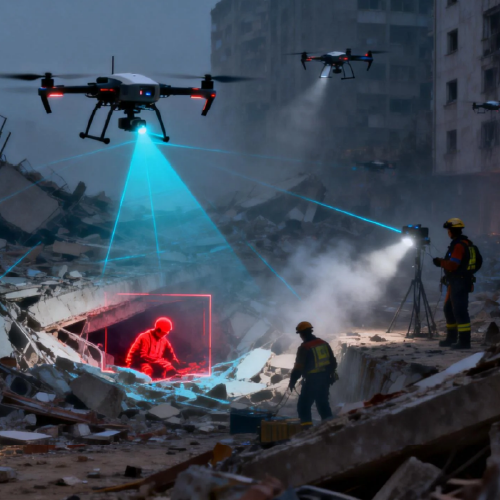
Zero-latency disaster mapping, precise target localization, and offline continuous operation for efficient rescue.

Centimeter-precision collaborative mapping, dynamic geographic change monitoring, and automatic updates for land surveys/urban planning — the same capability set extends to drones for agricultural crop surveillance across large farmland areas.

Key-area dynamic patrol with anomaly alerts, and high-precision 3D modeling for power/oil-gas facility O&M.
While DroneSwarm’s core architecture is built for mission-critical operations broadly, the same capabilities translate directly into drone technology used in agriculture:
Together, these onboard capabilities function as the agriculture drone software layer of the system — the same real-time DOM, 3D modeling, and change-detection engine described above, applied to farmland rather than terrain or infrastructure. This makes DroneSwarm one option within broader agricultural drone solutions for operations managing large or multiple fields.
Essentially yes — the same real-time DOM, 3D modeling, and change-detection engine applies, just pointed at farmland instead of terrain or facilities. This is what makes the underlying drone technology used in agriculture here an extension rather than a separate product.
Yes, the path-planning engine supports intelligent zoning and route-overlap optimization for large or irregular farmland, using the same coverage logic as efficient drones for agricultural crop surveillance at scale. Plot size and shape do not require a different setup.
Yes — positioning combines GPS with visual SLAM rather than relying on satellite signal alone, keeping accuracy under 1×GSD even when signal quality drops. This fusion approach is what gives UAV positioning its consistency in difficult conditions.
No — when the link drops, the system switches to cached imagery and keeps processing locally, so tracking of the target continues without interruption. UAV tracking doesn't require a continuous connection to remain active.
Most project cases are covered by client confidentiality agreements, so direct examples are not shown. However, we can discuss a pilot or demo tailored to your conditions. Please contact our team with a brief description of your use case to get started.
Tell us about your project or inquiry, and our team will get back to you within 24 hours.
Follow Us :

Excellence in Provider of Spatial Intelligence Products & Solutions
Copyright © 2026 Ice Cypress All rights reserved