UAV procurement decisions should begin with the mission rather than the aircraft itself. A small emergency team surveying a remote area has very different requirements from an organization coordinating persistent coverage across a large industrial site. We see the choice between single-operator and multi-operator UAV systems as a question of scale, complexity, terrain, and response objectives. Selecting the right architecture can determine how quickly aerial information becomes useful intelligence.

Start With Mission Scale and Operational Complexity
A single-operator UAV system is generally suited to missions where one person needs to deploy, control, and interpret aerial information quickly. This model is valuable when teams are small, equipment must be carried on foot, and operational decisions cannot wait for additional personnel or a dedicated control station.
Multi-operator systems take a different approach. Multiple personnel may divide responsibilities such as flight control, mission coordination, payload management, data analysis, and field response. This structure becomes more appropriate when missions involve several aircraft, wider coverage areas, complicated flight plans, or simultaneous objectives.
The choice is therefore not simply about whether one or several people can fly a UAV. It is about matching the operational architecture to the information workload and mission demands.
When a Man Portable UAV Makes More Sense
Portability becomes critical when reconnaissance teams operate away from roads, vehicles, or permanent infrastructure. Mountains, damaged facilities, reservoirs, forests, and other difficult environments can make bulky equipment impractical.
Our Hunter Wing is designed around this specific requirement. It is a lightweight, man–portable UAV solution for drone reconnaissance and recognition missions. The additional intelligent computing module and power supply weigh less than 600g, allowing one operator to carry the complete add-on kit into challenging terrain.
The system also reduces deployment complexity. Hunter Wing is compatible with multiple series of DJI industrial UAVs, and the AI Computing Box connects directly to the remote controller. The published workflow requires three basic steps: power on, connect, and set flight routes. No hardware modification or specialized professional training is required.
Why Real-Time Intelligence Changes the Equation
Traditional reconnaissance workflows can separate data collection from data interpretation. A UAV captures imagery, the aircraft returns, and processing happens afterward. That workflow can be acceptable for routine surveying, but it becomes less attractive when teams need immediate situational awareness.
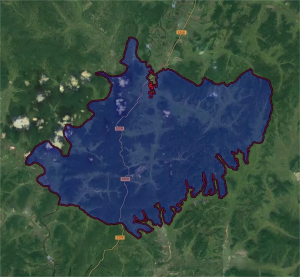
Hunter Wing performs mapping, recognition, and positioning during flight. It generates orthomosaic mapping and on-site terrain information in real time, while recognition and positioning results are continuously processed and transmitted to the ground station. This allows teams to access mission results immediately rather than waiting for conventional post-flight processing.
For emergency rescue, security patrols, and inspection missions, that difference can influence operational decisions. A reconnaissance UAV becomes more valuable when its imagery can be converted into usable information within the mission window.
When Collaborative Multi-UAV Systems Make More Sense
A multi-operator architecture becomes attractive when the mission itself is too broad or complex for one person. Large-area mapping, prolonged surveillance, multiple simultaneous flight tasks, and coordinated operations can generate more workload than a single operator can reasonably manage.
We address large-scale, multi-UAV mission requirements through our BeeSmart Drone Swarm solution. Its architecture combines an onboard intelligent unit, collaborative UAV network, and portable ground terminal to support coordinated mission planning, data collection, processing, and operational decision-making.
The advantage is scalability. Multiple UAVs can share tasks and collect information across larger areas, while intelligent coordination can reduce the manual workload associated with managing multiple aircraft. This makes a collaborative multi-UAV architecture suitable for missions where wider coverage and simultaneous activity are priorities.
Compare the Total Operational Requirement
For business buyers, the decision should extend beyond aircraft specifications. We recommend evaluating personnel availability, deployment location, mission duration, coverage requirements, data-processing needs, and the consequences of delayed information.
A single-operator system can be particularly efficient when rapid deployment and mobility are priorities. A man-portable UAV can accompany a responder or inspection specialist without requiring a large field team. The smaller operational footprint can simplify deployment and make aerial reconnaissance practical in places where additional personnel are difficult to position.
A multi-operator architecture, meanwhile, may justify its additional complexity when organizations need broader coverage, multiple simultaneous tasks, or coordinated UAV activity. The additional operational resources can provide greater mission capacity when the environment demands it.
Building the Right Reconnaissance UAV Strategy
We believe buyers should also consider what happens after aerial data is collected. A capable reconnaissance UAV should fit into a broader intelligence workflow rather than operate as an isolated camera platform.
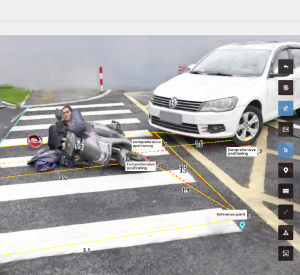
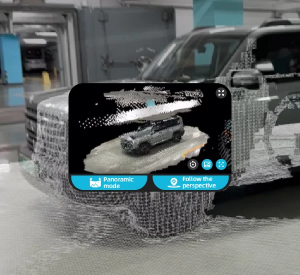
Our wider technology portfolio connects UAV data with spatial 3D reconstruction, AI analysis, mapping, and target intelligence. The IceCypress Technology product portfolio includes Hunter Wing, BeeSmart Drone Swarm, DroneSwarm Real-Time Onboard Analysis System, Mirauge3D, Rusa, TrackSight, and a Low-Altitude 3D Intelligent Operations Platform.
This broader ecosystem allows organizations to think about UAV procurement as part of an information pipeline: capture data, reconstruct the environment, recognize relevant targets, and deliver actionable spatial intelligence.
Making the Choice With the Mission in Mind
There is no universal winner between single-operator and multi-operator UAV systems. We see the single-operator model as the stronger fit when portability, fast deployment, limited staffing, and immediate field intelligence are priorities. A man-portable UAV such as Hunter Wing is particularly relevant to emergency response, security patrols, inspection, and other missions where teams must move quickly.
Collaborative multi-UAV systems become more relevant when organizations need scalable coverage, coordinated aircraft, or complex mission execution. For those requirements, swarm architectures can distribute tasks across multiple UAVs while reducing manual coordination.
At IceCypress Technology, we approach both models as parts of a larger spatial intelligence strategy. By matching UAV architecture to mission scale and integrating aerial data with AI-driven analysis, organizations can turn reconnaissance from simple image collection into faster, more informed operational decision-making.