Commercial drone operations generate substantial volumes of aerial imagery and sensor data. Turning these inputs into useful information requires computing resources, reliable communications, and effective data management. Businesses choosing an AI architecture must decide whether to process information onboard the drone or send it to remote cloud servers. The right choice depends on response-time requirements, mission conditions, processing workloads, and total operating costs.

How Onboard AI and Cloud AI Differ
Onboard AI processes data using computing resources installed on the drone. Instead of transmitting every image to a remote server, the system can analyze collected information during flight and produce results closer to the source. This approach is particularly relevant when operators need timely mapping, target recognition, or location information in the field.
Cloud AI transfers data to remote computing infrastructure for processing. Cloud platforms can provide substantial computing capacity, centralized storage, and shared resources for teams managing multiple projects. However, transferring large datasets requires network bandwidth, and the time needed to upload data and receive results can affect operational responsiveness.
Neither architecture is universally superior. Research published in IEEE’s Internet of Things Journal identifies latency, energy consumption, computing capacity, and communications as important considerations when integrating AI with UAVs. The practical decision is how to balance these factors against each mission’s requirements.
Performance: Latency, Processing Capacity, and Connectivity
For time-sensitive applications, processing location can influence how quickly information becomes available. With drone edge computing, onboard analysis reduces dependence on transmitting raw imagery to a remote server before generating results. This can be useful for infrastructure inspections, emergency response, and aerial surveys where field teams need current spatial information.
Cloud AI has a different advantage: access to centralized computing resources that may exceed the capacity available on an individual drone. Complex workloads involving large datasets or extensive historical comparisons may benefit from cloud infrastructure, especially when immediate results during flight are unnecessary.
Connectivity also matters. Remote forests, mountainous regions, and disaster zones may have inconsistent communications. An onboard workflow can reduce the amount of data that must cross the network, although actual operating continuity depends on the system’s design and available equipment.
Onboard processing has its own constraints. Computing hardware consumes power, generates heat, and adds equipment requirements. Heavy workloads may compete with other onboard resources. Businesses should therefore evaluate processing speed under realistic mission conditions rather than assuming that edge architecture always delivers faster results.
Comparing the Total Cost of Ownership
The financial comparison extends beyond the initial equipment price. Onboard AI may require capable processors, integration work, software development, and hardware maintenance. These costs need to be weighed against potential savings in data transmission, cloud processing, and post-flight handling.
Cloud AI can reduce the need to equip every drone with high-performance computing hardware. However, operating expenses may include data transfer, cloud processing, storage, and application services. When fleets produce large volumes of imagery, these recurring costs deserve particular attention.
A useful evaluation compares the total cost per mission. Include equipment depreciation, battery consumption, connectivity, computing, staff time, and data management. Then assess how much processing must occur during flight and how much can wait until the mission ends.
The best financial outcome often depends on workload distribution. Organizations with frequent real-time requirements may favor onboard processing, while those conducting offline analysis of extensive datasets may find cloud resources more economical. A hybrid architecture can allocate different tasks to each environment.
Where Drone Data Analytics Fits Best
Effective drone data analytics depends on more than the location of the AI model. Image quality, positioning accuracy, processing methods, and the usefulness of the output all affect operational value.
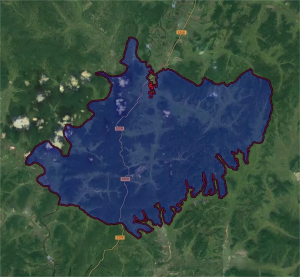
For surveying and mapping teams, real-time orthophoto maps can help field personnel review terrain while a mission is underway. Infrastructure operators may prioritize identifying and locating relevant targets, while emergency teams may need updated spatial information to coordinate activities. These use cases place different demands on latency, accuracy, and computing capacity.
A practical architecture should separate time-critical tasks from workloads that can be completed later. Initial target recognition, positioning, and map generation may be handled near the data source, while long-term archiving and cross-project analysis can remain in the cloud. This division helps control network demand without eliminating access to centralized resources.
When evaluating drone data analytics, buyers should also examine the actual outputs available, the conditions under which performance figures were measured, and the compatibility of results with existing operational systems. Clear evaluation criteria make comparisons more meaningful than headline processing speeds alone.
How Icecypress Technology Approaches Onboard Processing
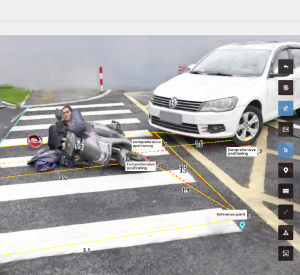
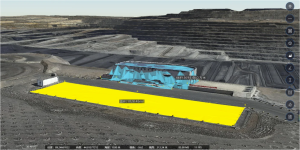
At Icecypress Technology, we develop visual spatial intelligence technologies across 3D reconstruction, UAV mapping, and spatial AI. Our DroneSwarm Real-Time Onboard Analysis System is designed for precision drone data acquisition and real-time monitoring through multi-UAV collaboration, 2D/3D reconstruction, target recognition, positioning, tracking, and unified command.
Our system generates digital orthophoto maps (DOMs) during flight, reducing dependence on post-flight processing. Embedded bundle adjustment supports geometric correction and centimeter-level mapping under specified operating conditions.
Our approach to drone edge computing also addresses communication efficiency. By transmitting processed outputs instead of complete raw-image datasets, DroneSwarm reduces the amount of information that needs to travel across communication links. Validated tests have shown link loads as low as 1% of conventional raw-data transmission workflows.
This figure describes communication link load in the tested workflow, not a universal reduction in total operating costs. Actual results depend on mission conditions, data requirements, and network configuration. For multi-UAV operations, processing and sharing useful outputs can help teams manage data flows while maintaining access to mapping and recognition results.
Choosing an Architecture for Long-Term Value
The most suitable design begins with operational requirements. Businesses should identify acceptable response times, typical dataset sizes, available connectivity, onboard power constraints, security policies, and expected fleet utilization. Pilot deployments can then compare processing time, data transfer volumes, output quality, and cost per mission.
For many organizations, drone data analytics will benefit from a hybrid strategy that uses onboard processing for time-sensitive outputs and cloud infrastructure for intensive post-mission analysis. At Icecypress Technology, we support this decision-making process through onboard mapping and spatial intelligence capabilities designed for collaborative UAV operations. By matching computing architecture to real workloads, businesses can balance responsiveness, resource use, and long-term operational costs.