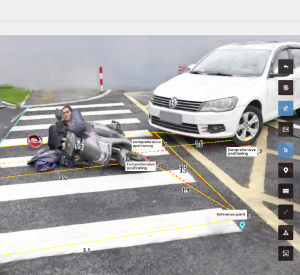
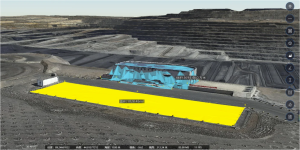
Frontline officers often need to document accident scenes, emergencies, and other complex environments while working under time pressure. Traditional documentation methods, including photographs, written notes, and measurements, remain important, but they may not fully capture the spatial relationships between objects. Three-dimensional reconstruction can provide a more comprehensive visual record, yet complicated software workflows and technical requirements can discourage adoption among personnel without specialized training.
For public safety agencies, investigation teams, and emergency services, the challenge is making digital tools practical for everyday fieldwork. Successful adoption depends not only on reconstruction quality but also on accessible workflows, manageable training requirements, and reliable procedures for reviewing the resulting evidence.
Why Scene Reconstruction Software Creates a Skills Barrier
Complex Workflows Slow Field Adoption
Some reconstruction workflows require users to understand image selection, camera positioning, data processing, model adjustment, and export settings. When these steps are difficult to navigate, officers may need technical support before they can produce usable results.
This creates operational challenges for organizations with limited training resources. Personnel must learn new tools without compromising their primary responsibilities, while supervisors need consistent documentation practices across different teams and locations.
Accident reconstruction software should therefore be evaluated by more than its technical capabilities. The accessibility of its interface, clarity of its workflow, and time required to produce a reviewable model also matter.
Field Conditions Make Data Collection Difficult
Scene documentation rarely takes place in ideal conditions. Lighting changes, restricted access, moving people, weather, and time constraints can affect the images or videos available for reconstruction. Officers may also use different supported devices depending on the assignment.
Scene reconstruction software needs to accommodate practical variations in field capture while communicating any limitations that could affect the resulting model. A straightforward workflow can reduce unnecessary adjustments, but it cannot eliminate the need for suitable source imagery and careful collection practices.
Designing a More Accessible Reconstruction Workflow
Simplify the Process from Capture to Model
A practical workflow should make each stage clear: capture the scene, transfer the supported imagery or video, process the data, review the reconstructed model, and export the required output. Clear instructions help officers understand what to do next without requiring extensive knowledge of photogrammetry or 3D modeling.
Organizations should also establish standard operating procedures for common assignments. Templates, short task-based guides, and practical exercises can help personnel learn through realistic scenarios rather than lengthy technical instruction.
For accident reconstruction software, reducing unnecessary manual adjustment can be particularly valuable. Officers can focus on documenting the scene and reviewing the output, while specialists remain available for complex cases or questions involving technical validity.
Provide Training Around Real Tasks
Training is more effective when it reflects the work officers actually perform. For example, an introductory session might cover documenting a vehicle collision, capturing an indoor incident scene, or recording the condition of damaged infrastructure.
A structured program should explain how to capture sufficient visual coverage, recognize incomplete data, review model quality, and preserve original files. Personnel should also understand that a visually detailed model is not automatically a complete or legally sufficient record.
Supervisors can assess adoption through practical exercises, processing success rates, and the amount of assistance users need. These measures help organizations identify training gaps and improve procedures over time.
How Rusa Supports Rapid 3D Scene Reconstruction
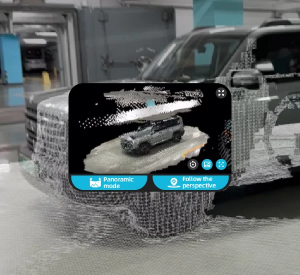
At Icecypress Technology, we develop visual spatial intelligence technologies for applications including 3D reconstruction, UAV mapping, and spatial AI. Our Rusa Rapid 3D Scene Reconstruction System converts imagery or video captured with supported field devices into measurable, high-detail 3D scene models for accident investigation, emergency response, forensics, cultural preservation, and engineering applications.
Rusa is designed to simplify the reconstruction workflow and reduce manual adjustment. Users can preview reconstructed models within minutes, while high-accuracy application scenarios can produce detailed scene models in as little as 40 minutes. Actual processing time depends on the application and relevant data conditions.
The system also features adaptive frame extraction that adjusts to different capture speeds, supporting flexible data collection across varied field conditions. This capability can help accommodate different recording situations without requiring officers to manage every frame-selection decision manually.
For agencies introducing accident reconstruction software, these workflow characteristics provide a basis for evaluating how 3D documentation might fit existing operations. Teams should test the system using representative devices, scenes, and recording conditions before establishing standard procedures.
Maintaining Accuracy and Evidence Quality
Accessibility must not come at the expense of reliable documentation. Even user-friendly scene reconstruction software depends on appropriate image coverage, sufficient visual detail, and suitable capture conditions. Poor lighting, repetitive surfaces, motion blur, or missing viewpoints may affect reconstruction quality.
Agencies should define minimum capture requirements and teach officers to identify incomplete or visibly distorted models. Where measurements are used for formal investigations, personnel should understand the system’s measurement capabilities and limitations, with qualified specialists reviewing outputs when necessary.
Evidence management also deserves attention. Organizations should preserve original imagery or video, document relevant processing steps, control access to sensitive records, and follow applicable requirements for evidence retention and disclosure. A reconstructed model should be interpreted alongside source materials and other investigative evidence, not treated as an independent explanation of what happened.
Making Adoption Part of Daily Operations
The most effective adoption strategy combines accessible technology, practical training, standardized capture procedures, and appropriate quality review. Agencies can begin with a limited set of common tasks, gather feedback from frontline users, and expand deployment as their teams develop confidence.
At Icecypress Technology, we provide Rusa to support faster, more accessible 3D scene documentation across professional workflows. By combining rapid model preview, reduced manual adjustment, and flexible frame extraction, we help organizations explore how digital reconstruction can fit frontline operations while retaining the technical oversight required for dependable investigative work.