Mining companies face growing pressure to explain their environmental, social, and governance (ESG) performance with reliable evidence. Investors, regulators, customers, and local communities increasingly want more than annual statements: they need clear information about land disturbance, resource use, operational safety, and environmental management. Digital technologies can help mining operators connect operational records with spatial information, making ESG reporting more transparent and easier to review.
A digital twin offers a practical way to organize this information. By combining three-dimensional site models, drone surveys, Internet of Things (IoT) data, and operational records, mining companies can develop a more complete picture of site conditions and changes over time. At Icecypress Technology, we develop visual spatial intelligence technologies spanning 3D reconstruction, UAV mapping, and spatial AI to support more data-informed mining management.

Why ESG Reporting Needs Better Mining Data
Mining activities change landscapes, consume resources, and involve complex operational risks. ESG teams often need information from multiple departments, including surveying, environmental management, production, equipment maintenance, and occupational safety. When these records remain in separate systems or spreadsheets, consolidating them can require considerable manual effort and make inconsistencies harder to identify.
A digital mine approach helps connect spatial information with operational data. Rather than relying exclusively on written reports or isolated measurements, teams can examine site conditions alongside relevant production and monitoring records. This shared context can improve the traceability of reported figures and help stakeholders understand how operational activities relate to environmental and social commitments.
However, digital tools do not automatically make ESG disclosures accurate. Reporting quality still depends on appropriate measurement methods, consistent data definitions, reliable source records, and documented review procedures.
Using 3D Spatial Data to Track Environmental Performance
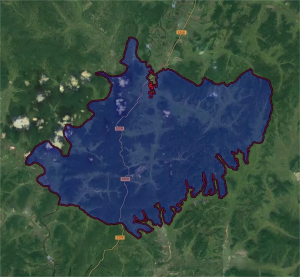
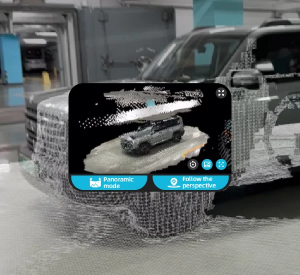
Environmental reporting often involves land-use changes, excavation volumes, site rehabilitation, water management, and potential impacts on surrounding ecosystems. Drone surveying and 3D reconstruction can provide spatial records of mine terrain at different points in time. Comparing these models helps teams examine changes in landforms, measure material volumes, and document the progress of selected rehabilitation activities.
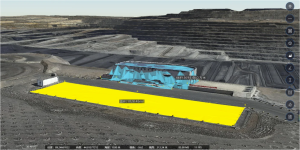
These records can contribute to environmental assessments when teams define suitable survey boundaries, measurement intervals, and calculation methods. For example, a mine operator could compare terrain models from different reporting periods to estimate changes in an excavation area. Such measurements need appropriate validation and should be interpreted alongside field observations and relevant environmental records.
A digital mine platform can also bring spatial information into a shared operational view. This helps environmental specialists and site managers discuss specific locations using a common reference instead of relying solely on separate documents. However, 3D terrain data cannot replace laboratory testing, water-quality sampling, biodiversity surveys, or other methods required for particular environmental indicators.
Connecting Operational Records with ESG Metrics
Spatial models are most useful for ESG reporting when they connect with other operational information. IoT devices, production systems, equipment records, and scheduling platforms may provide complementary data about site activity. Bringing these sources together can help reporting teams examine relationships between operational changes and environmental or safety indicators.
For instance, production records can provide context for reported material volumes, while equipment data may help teams review operating patterns relevant to energy consumption. Where suitable sensors and validated measurement methods are available, monitoring records can also contribute to environmental reporting. Each metric still needs a defined scope, unit, reporting period, and accountable data owner.
At Icecypress Technology, our Digital Twin Mine Solution combines drone surveying, 3D spatial data, IoT, AI-assisted analysis, and cloud connectivity within a unified mine-management environment. It supports terrain and production measurement, operational planning, safety monitoring, equipment management, and remote collaboration across open-pit and other mining operations. These capabilities provide a spatial and operational foundation that mining organizations can incorporate into their broader data-management processes.
Improving Governance, Safety, and Data Traceability
Governance is another important part of credible ESG reporting. Companies need to explain where reported figures originate, who reviews them, and how changes are recorded. A unified mining monitoring system can connect IoT, production, equipment, and scheduling data within one operational hub, helping authorized teams access relevant records and coordinate reporting activities.
Our Integrated Mine Operations Center supports mainstream IoT access, integration with existing systems, real-time data upload and updates, and report downloads. These functions can help mining organizations consolidate operational information and reduce the need to collect every record separately. Reporting teams must still establish appropriate access controls, review responsibilities, and procedures for correcting incomplete or inconsistent data.
Safety reporting also benefits from a clearer operational picture. Spatial models and site monitoring information can help teams examine hazardous areas, review operational conditions, and coordinate responses. However, digital records should complement established safety procedures, worker consultation, and incident-reporting processes rather than serve as substitutes for them.
Implementing Smart Mining Solutions for ESG Reporting
Successful implementation begins with selecting material ESG indicators rather than collecting data without a defined purpose. The GRI 14 Mining Sector Standard addresses mining-specific impacts, including emissions, waste, biodiversity, human rights, and community-related topics. Companies can use applicable reporting standards to identify relevant disclosures and determine what supporting evidence their operations need.
Next, organizations should map each indicator to its data source, collection frequency, responsible department, and verification method. Surveying teams may manage terrain models, environmental specialists may oversee sampling records, and production managers may maintain operational figures. Shared definitions and consistent reporting periods help different departments contribute information without confusing estimates, measurements, and calculated values.
Smart mining solutions are most useful when introduced in stages. Operators can begin with a clearly defined site or reporting challenge, assess existing systems, and connect suitable data sources before expanding the scope. Training, data-quality checks, and documented procedures are equally important. A digital mine should support established reporting responsibilities, not create a separate information layer that staff struggle to maintain.
Building a More Evidence-Based ESG Strategy
Digital twin data can strengthen mining ESG reporting by connecting spatial models, operational records, and site-level observations. Its value lies in providing useful context for environmental measurements, operational reviews, and governance processes—not in replacing professional judgment or established reporting standards.
At Icecypress Technology, we bring together 3D reconstruction, UAV mapping, spatial AI, and integrated mine-management capabilities to support more connected mining operations. By adopting smart mining solutions with clearly defined reporting objectives and appropriate validation procedures, mining organizations can build a more traceable evidence base for sustainability disclosures and make better-informed decisions about their operational impacts.