Motion capture has traditionally been associated with reflective markers, specialized suits, carefully controlled environments, and time-consuming preparation. Artificial intelligence is changing that workflow. By combining computer vision, pose estimation, and high-speed image analysis, markerless systems can identify and track objects or body features directly from video. For research teams and industrial users, this shift makes motion capture tracking more flexible while opening new possibilities for field-based testing and real-time analysis.

Why Traditional Motion Capture Relies on Physical Markers
Conventional optical motion capture relies on markers attached to specific points on a subject or object. Multiple synchronized cameras observe these markers, allowing software to reconstruct their positions and calculate movement. This approach has become an important reference technology for biomechanics because it can provide highly detailed kinematic information under controlled conditions.
The trade-off is operational complexity. Preparing a subject and placing markers can take time, while controlled laboratory environments are often required. These limitations make it difficult to apply motion analysis to large groups, rapid testing, or situations where subjects cannot conveniently wear markers.
For commercial research and engineering teams, the problem is therefore not simply measurement accuracy. Setup time, workflow flexibility, and the ability to capture movement in realistic environments can also determine whether a system is practical.
How AI Removes the Need for Physical Markers
Markerless motion capture replaces physical markers with computer vision. Instead of looking for reflective points attached to a subject, AI models identify recognizable features, body landmarks, or object characteristics within video frames.
Modern systems commonly use pose-estimation algorithms to identify two-dimensional keypoints before reconstructing three-dimensional movement. A 2026 review describes a workflow involving 2D keypoint identification, triangulation, and inverse kinematics, with neural networks increasingly supporting the process.
This fundamentally changes the capture experience. A subject can move without wearing a specialized suit, while researchers can collect data using camera-based observation. For certain applications, the result is a faster transition from setup to measurement and a more natural testing environment.
Motion Capture Tracking Becomes More Flexible
The biggest practical advantage of markerless motion capture tracking is flexibility. Without physical markers, teams can analyze live specimens, finished products, athletes, machinery, or other targets without modifying the target simply to make it trackable.
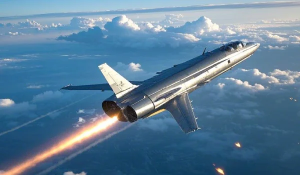
That flexibility matters particularly in industrial environments. Aerospace testing, advanced manufacturing, biomechanics, and field research may involve objects that are difficult to prepare or that must remain in their original condition.
Markerless systems can also make repeated testing easier. When the same tracking infrastructure can handle different targets without changing physical marker configurations, engineering teams can reduce preparation between experiments and adapt testing procedures more quickly.
Real-Time AI Tracking Requires More Than Detection
Removing markers is only one part of the technological challenge. A useful system must continue recognizing targets as they move rapidly, become partially hidden, or pass through changing lighting conditions.
Computer vision research has long identified occlusion and the complex, articulated nature of human movement as difficult problems for vision-based tracking. Modern AI approaches address these challenges by combining recognition, temporal information, and model-based estimation rather than treating every video frame as an isolated image.
For industrial users, this distinction is crucial. A system that identifies a target once is useful for detection, but a system that maintains its identity and movement history can support genuine motion analysis.
From Position to 6-DoF Motion Analysis
Professional motion analysis often requires more than knowing where a target is located. Engineers may need to understand both translation and rotation.
Six-degree-of-freedom, or 6-DoF, tracking describes three translational dimensions and three rotational dimensions. Capturing these components can provide a more complete representation of how an object moves through space.
However, 6-DoF markerless tracking remains technically demanding. Research on markerless biomechanics notes that systems based only on joint-center locations can have limitations in estimating rotational movement, particularly around a segment’s longitudinal axis.
That makes robust target recognition, feature extraction, camera calibration, and motion estimation essential when markerless tracking is applied to demanding industrial or research workflows.
Where Motion Tracking Software Fits
AI hardware cannot deliver useful motion analysis without an analytical software layer. Motion tracking software needs to organize video input, recognize targets, maintain identities, calculate movement, and present results in a form that technical teams can interpret.
This software layer can also determine how efficiently organizations use collected data. Researchers may need high-speed trajectory information, while manufacturing teams may focus on repeatability, deformation, or movement deviations. Biomechanics researchers may require kinematic outputs for subsequent analysis.
Recent reviews show that markerless systems are increasingly being explored in sports science, rehabilitation, and biomechanics, while validation remains an important consideration for different movements and measurement requirements.
How We Apply AI to High-Speed Target Tracking
At IceCypress Technology, we developed our TrackSight High-Speed Target Tracking & Analytics System for demanding motion-analysis environments. The system combines AI-driven recognition with high-speed motion analysis, sub-pixel accuracy, and 6-DoF motion tracking.
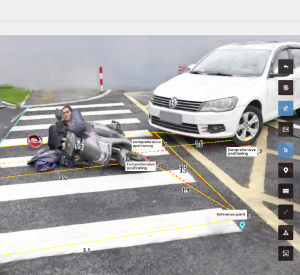
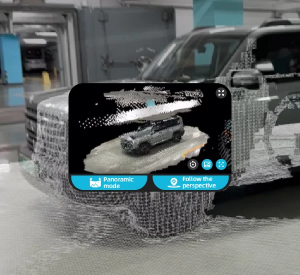
Our markerless tracking approach identifies unmarked objects without requiring physical preparation. It is designed for applications involving live specimens, finished surfaces, and rapid field testing. TrackSight can simultaneously handle more than five targets and achieves a tracking recognition rate of up to 99.6%, including challenging conditions involving occlusion and lighting changes.
This allows teams to change motion capture tracking strategies without replacing the underlying system, supporting greater flexibility across aerospace, advanced manufacturing, and biomechanics applications.
Choosing Markerless Systems With the Right Expectations
Markerless motion capture should not be viewed as an automatic replacement for every marker-based application. Research continues to identify differences in accuracy depending on movement type, body region, environment, and measurement objective. Recent systematic evidence indicates that markerless systems show promising validity for several kinematic measurements, while further validation remains necessary for complex applications.
For business buyers, the better question is whether a system provides the appropriate combination of accuracy, speed, tracking robustness, setup efficiency, and analytical capability for a specific workflow.
The Next Stage of Motion Analysis
AI-based markerless tracking can remove the need for physical markers in applications where suitable visual features can be recognized reliably. More importantly, it is helping transform motion analysis from a highly controlled laboratory procedure into a more flexible digital measurement process.
At IceCypress Technology, we see the future of motion tracking software and motion capture tracking as increasingly intelligent, real-time, and adaptable. By combining AI recognition, high-speed analysis, sub-pixel measurement, and 6-DoF tracking, we aim to help professional teams capture meaningful movement data without requiring physical markers for every application.