Water utilities and industrial operators face different monitoring requirements depending on water quality, pipe dimensions, operating conditions, and maintenance access. Selecting Internet of Things (IoT) sensors based on price alone can lead to unsuitable measurement ranges, difficult installations, or unreliable data. At Icecypress Technology, we approach digital water management as a combination of field hardware, data connectivity, and spatial visualization. Effective smart water management solutions begin with matching each sensor to the actual conditions and decisions it must support.

Match Sensors to Water Quality Requirements
The first step is to define which water parameters need monitoring. Drinking water distribution, wastewater treatment, industrial process water, and source-water monitoring have different priorities. The US Environmental Protection Agency identifies parameters such as pH, temperature, conductivity, dissolved oxygen, turbidity, and disinfectant-related measurements among the options available for water monitoring.
For relatively clear drinking water, operators may prioritize pH, temperature, conductivity, and residual disinfectant measurements, depending on the treatment process and monitoring objectives. Wastewater applications may require turbidity, dissolved oxygen, or other parameters relevant to suspended solids and biological treatment. Industrial sites may need additional measurements based on the chemicals and processes involved.
Sensor selection should also account for the expected measurement range, required accuracy, response time, calibration requirements, and resistance to fouling or corrosion. Rather than installing every available sensor, we recommend identifying the operational question first and selecting instruments that can answer it reliably.
Select Hardware for Different Pipe Sizes
Pipe diameter influences sensor installation, measurement methods, and maintenance access. A sensor suitable for a small service line may not work effectively in a large transmission main without an appropriate installation arrangement.
For small-diameter pipes, compact inline sensors or suitable insertion probes may simplify installation where access and pressure conditions permit. Engineers should check connection dimensions, wetted materials, pressure ratings, temperature limits, and the available straight pipe length required by the instrument.
Larger pipes may accommodate insertion-type instruments, flow meters, or dedicated monitoring assemblies. For flow measurement, electromagnetic meters are often considered for conductive liquids, while ultrasonic technologies may suit certain applications where intrusive installation is undesirable. The choice depends on pipe material, fluid properties, flow conditions, and the instrument’s specified operating limits.
Our approach to smart water management solutions considers these physical constraints before integrating measurements into a digital platform. Hardware compatibility matters because accurate data collection depends on the complete installation, not simply the sensor’s nominal specification.
Account for Installation Environments
Environmental conditions can affect sensor performance and long-term maintenance costs. Underground chambers may experience moisture, flooding, and limited access. Outdoor installations face temperature changes, rain, and potential power or communication interruptions. Industrial environments may introduce vibration, corrosive substances, or electromagnetic interference.
Before procurement, we recommend reviewing enclosure protection, material compatibility, operating temperature, power supply, communication interfaces, and maintenance access. Wireless connectivity should also be evaluated against underground placement, surrounding structures, and the distance between monitoring points. Where signals cannot reliably reach a central network, local data collection or an alternative communication arrangement may be necessary.
The US Geological Survey emphasizes site selection, calibration, cleaning, and operational procedures for continuous water-quality monitoring. Its guidance reinforces the importance of considering field conditions alongside instrument specifications.
Connect Sensor Data with a Digital Twin
Choosing appropriate hardware is only one part of a connected water management system. Measurements become more useful when operators can relate them to physical assets, inspection tasks, and maintenance activities.
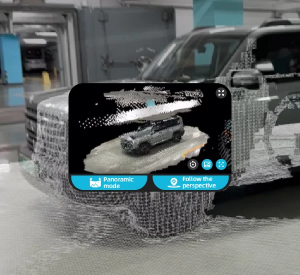
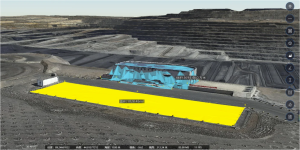
Our digital twin water treatment approach connects physical infrastructure with its digital representation for monitoring and operational coordination. Our platform supports 3D inspection planning and tracking, including AI-assisted route generation, 3D path visualization, and scheduled or priority-based inspection modes. Where configured, inspection results can be uploaded through WebSocket connections, while reports and activity records support subsequent review.
Work order management adds another operational layer. Our system uses heat maps and status-based icons to visualize pending, in-progress, and completed work orders. Teams can access work order details and progress information to coordinate maintenance activities.
For smart water management solutions, these functions provide context around sensor readings rather than treating each measurement as an isolated value. A well-designed digital twin water treatment workflow should associate measurements with the relevant equipment, location, and maintenance history wherever the necessary data integration is available.
Establish a Practical Selection and Maintenance Process
A structured selection process helps procurement, engineering, and operations teams evaluate equipment consistently. We recommend documenting five items before finalizing a sensor specification:
Monitoring objective: Define the parameter and operational decision the measurement supports.
Water characteristics: Record expected chemistry, solids content, temperature, and potential fouling.
Installation requirements: Confirm pipe dimensions, connection type, pressure, and available access.
Connectivity and power: Evaluate protocols, signal coverage, energy requirements, and data transmission intervals.
Lifecycle considerations: Review calibration frequency, cleaning needs, replacement parts, and total ownership costs.
After installation, teams should compare readings against appropriate reference methods, follow manufacturer calibration procedures, and document maintenance activities. Sensor data should also be checked for missing values, unexpected fluctuations, and inconsistencies with operating conditions.
Our digital twin water treatment platform can provide a digital context for inspection records and work order tracking, helping teams organize follow-up activities. Its practical value depends on the quality of connected data and the integration configuration selected for each deployment.
Building a Better-Fitted Water Monitoring System
Effective sensor selection starts with the water, the pipe, and the environment—not with a preferred device or platform. By evaluating measurement requirements, installation constraints, connectivity, and maintenance needs together, engineering teams can develop monitoring architectures suited to their specific infrastructure.
At Icecypress Technology, we combine digital twin capabilities, 3D inspection workflows, and work order visualization to support connected water infrastructure management. Our smart water management solutions help organizations bring physical assets and operational information into a shared digital environment, while our digital twin water treatment capabilities support inspection planning, record review, and maintenance coordination. The right hardware and integration strategy ultimately depends on each site’s technical requirements and operational priorities.